
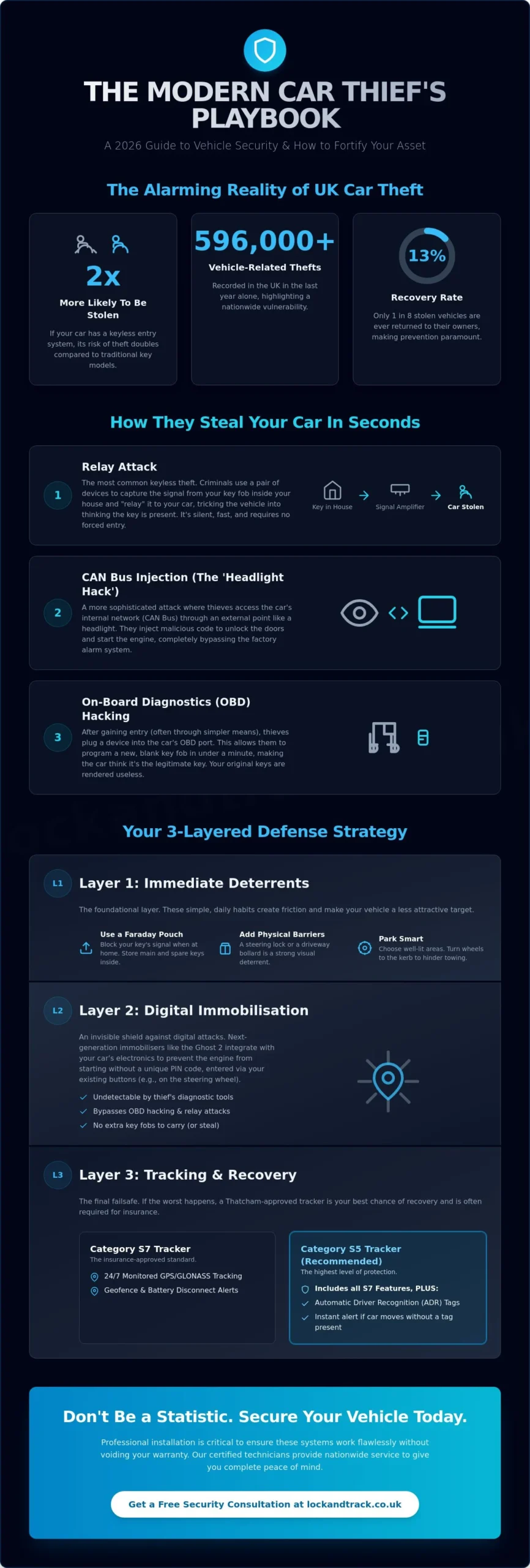
Cars with keyless entry systems are now twice as likely to be stolen compared to traditional models. With over 596,000 vehicle-related theft incidents recorded in the UK in the last year alone, learning how to prevent modern car theft methods is no longer optional for vehicle owners. It’s a critical requirement for keeping your driveway occupied.
You’ve likely felt that spike of anxiety when checking your window at night, or perhaps you’re confused by technical jargon like relay attacks and OBD hacking. It’s frustrating to realize that the factory-fitted technology meant to make your life easier has created new vulnerabilities that standard alarms cannot bridge.
We understand that you need more than just a loud siren; you need a proactive defense. This 2026 security guide will demystify high-tech threats and provide the expert-approved steps needed to secure your vehicle.
We’ll examine the impact of the Crime and Policing Act 2026, compare Thatcham S5 and S7 tracking standards, and provide an actionable checklist of hardware to restore your peace of mind. You’ll gain a clear strategy to transform your car from a vulnerable target into a protected asset that remains exactly where you parked it.
Key Takeaways
- Learn why digital entry has replaced the ‘smash and grab’ and how to prevent modern car theft methods using invisible software barriers.
- Discover how a layered security approach combines visual deterrents with high-tech hardware to stop professional gangs.
- Understand why traditional immobilisers are failing and how next-gen systems like the Ghost 2 provide an undetectable layer of protection.
- Identify the critical differences between basic GPS apps and Thatcham-approved S5 or S7 trackers for insurance compliance and recovery.
- Find out why professional, certified installation is essential to protect your vehicle’s warranty and ensure your security hardware remains effective.
Understanding Modern Car Theft: Beyond the Traditional Break-In
The era of broken glass and mangled ignition barrels is largely behind us. Organized gangs have traded physical force for digital precision. Modern vehicles are essentially high-powered computers on wheels, and thieves now target the software that controls them rather than the hardware itself. Understanding modern car theft methods is the first step toward securing your asset.
In 2026, the focus has shifted entirely to the Engine Control Unit (ECU) and keyless entry systems. These components are the brain and the gatekeeper of your car, and they’re currently under constant attack.
Criminals have adapted faster than many manufacturers. While the Crime and Policing Act 2026 has made the possession of signal amplifiers illegal, enforcement remains a challenge. Recovery rates for stolen vehicles in the UK hover around a staggering 13%, meaning if your car disappears, you likely won’t see it again. This low recovery rate is driven by the speed of digital theft.
Professional thieves don’t need minutes; they need seconds. They exploit the very convenience features we pay for, turning keyless entry and internal diagnostics into open invitations. If you want to know how to prevent modern car theft methods, you must realize that factory security is a baseline, not a complete solution.
Relay Attacks and Signal Boosting
This remains the most frequent method for keyless car theft across the UK. It’s a two-man operation that requires no physical contact with your home. One thief stands near your front door with an amplifier to catch the “handshake” signal from your key fob sitting inside.
The second thief stands by the car with a transmitter. The car is tricked into thinking the key is right next to the door. It unlocks and starts instantly. It’s silent, fast, and leaves your driveway empty before you’ve even realized the signal was intercepted.
CAN Bus Injection and OBD Hacking
While relay attacks are common, CAN bus injection is a more sophisticated threat often called the “headlight hack.” Thieves access the vehicle’s internal communication network, the Controller Area Network (CAN bus), through external wiring points like a headlight or bumper sensor. By injecting malicious code directly into the car’s nervous system, they tell the ECU to unlock the doors and disable the immobiliser.
Similarly, OBD hacking involves plugging a device into the On-Board Diagnostics port to program a blank key in seconds. These methods are particularly dangerous because they bypass standard factory-fitted alarms entirely, making it vital to learn how to prevent modern car theft methods through layered, secondary security.
Immediate Steps to Secure Your Vehicle Daily
Securing your car starts with creating friction. Thieves want an easy win. If your vehicle looks difficult to steal, they’ll likely move to the next driveway. This is the core of a layered security approach. You don’t rely on just one system. Instead, you stack physical and digital barriers. This makes the effort required outweigh the potential reward for the criminal. When you understand how to prevent modern car theft methods, you realize that even small daily habits can disrupt a professional’s plan.
Your parking strategy also matters. Always park in well-lit areas or under the coverage of a security light. If you have a driveway, consider installing a telescopic bollard. This creates a physical “dead end” for your vehicle. It’s a clear signal that your car isn’t going anywhere without a struggle. Simple actions, like turning your wheels toward the kerb, can also make it harder for thieves to tow or drag your vehicle away quickly.
Signal Blocking and Faraday Technology
Relay attacks happen because your key fob is constantly broadcasting its “unlock” code. You need to silence it. Faraday pouches and boxes are the most effective way to do this. These containers use a metallic lining to block radio frequency signals. Always test your pouch.
Place your key inside, stand next to your car, and try to open the door. If it stays locked, the shield is working. Don’t forget your spare keys. Professional gangs often scan for signals from secondary fobs kept in drawers or cabinets. While a new government law aims to ban the sale of signal amplifiers, you must remain proactive. Storing keys in a signal-blocking box at the back of your house, away from doors and windows, is a vital daily habit.
Physical Barriers and Visual Deterrents
Physical security is making a massive comeback. In a world of invisible digital attacks, a heavy steering wheel lock is a powerful psychological deterrent. It tells a thief that even if they hack the software, they still have a manual struggle ahead. Most thieves don’t want to spend time cutting through hardened steel in a residential area. OBD port protectors are another essential layer.
These locks physically block access to the diagnostics port, preventing criminals from plugging in devices to program new keys. For those learning how to prevent modern car theft methods, combining these daily habits with professional hardware is the gold standard. If you’re looking for a way to strengthen your current setup, you can explore expert-recommended security bundles to find the right fit for your vehicle.
Implementing Digital Protection: The Power of Next-Gen Immobilisers
Traditional “cut-wire” immobilisers are no longer enough to stop a determined criminal. In the past, security systems relied on physical relays that thieves could eventually locate and bridge. Modern car theft has evolved into a digital race, and your security must stay ahead of the curve.
Digital immobilisers represent the most effective answer to how to prevent modern car theft methods because they don’t rely on vulnerable physical connections. Instead, they interact directly with the vehicle’s internal communication network.
Software-based protection is essentially invisible. Unlike older systems that used flashing LEDs or bulky key fobs, next-gen devices leave no physical or electronic trace. They communicate using the car’s existing Controller Area Network (CAN bus).
This means there are no radio frequency signals for a thief to intercept with a grabber or scanner. If a criminal cannot find the device or capture its signal, they cannot bypass it. This shift from physical to digital barriers provides the absolute confidence you need when leaving your vehicle unattended.
The Ghost 2 Immobiliser: Invisible Security
The Ghost 2 Immobiliser is a market leader for a reason. It requires a unique PIN sequence entered through your car’s existing steering wheel, door panel, or console buttons. Without this specific code, the engine simply won’t start.
Because it doesn’t broadcast a signal, it’s completely undetectable to the diagnostic tools thieves use to find security hardware. It also includes a “service mode” feature. This allows you to hand your car over for maintenance or a car wash without revealing your secret PIN, maintaining your security at all times.
Scorpion X-Series and Alternative Digital Locks
The Scorpion X-Series Immobiliser offers another layer of professional-grade defense for those serious about vehicle preservation. It integrates seamlessly with modern vehicle electronics to prevent engine start even if a thief has managed to clone your key or access the OBD port. These systems are designed to be proactive. They don’t just alert you to a theft; they stop the vehicle from moving in the first place.
Choosing a digital lock is a decisive step in how to prevent modern car theft methods, ensuring your car remains a stationary, unmovable object to anyone without authorized access. By removing the “handshake” signal entirely, you eliminate the primary vulnerability exploited by modern organized gangs.
Ensuring Recovery with Thatcham-Approved Trackers
Prevention is your primary shield, but recovery is your absolute fail-safe. If a professional gang manages to bypass your first layers of defense or simply tows your vehicle away, you need a way to bring it back. Many owners rely on factory “find my car” apps.
These are convenience features, not security systems. Professional recovery relies on Thatcham-approved hardware that connects directly to a 24/7 Secure Operating Centre (SOC). These centres don’t just watch a map; they actively coordinate with police forces to intercept stolen assets in real time. Understanding how to prevent modern car theft methods requires a recovery plan that works even when the thief has the vehicle in motion.
Insurance companies insist on Thatcham-certified trackers because they meet rigorous standards for reliability and signal resilience. High-end systems use a combination of GPS for precise location, GSM for communication, and sometimes VHF (Very High Frequency) technology.
VHF is particularly vital because it can broadcast through concrete walls or metal shipping containers, places where standard GPS signals often fail. This ensures that even if your car is hidden in an underground car park, it remains visible to recovery teams.
S5 vs S7 Trackers: Which Do You Need?
The choice between Thatcham categories depends on your vehicle’s value and your desired level of proactivity. S7 trackers provide the essential standard for insurance-approved GPS tracking and recovery. They’re effective, reliable, and significantly increase the chances of a successful police recovery. However, the Scorpion S5 Tracker is the gold standard for high-value asset protection.
It’s specifically designed to combat key cloning and relay attacks by requiring an authorised driver to be present with a physical tag. If you want the most comprehensive answer to how to prevent modern car theft methods, the S5 category offers the highest tier of technical compliance.
Automatic Driver Recognition (ADR) Explained
ADR tags are small, discreet devices you carry with you. They’re the critical link in stopping “silent” thefts. If your car engine starts or the vehicle is moved without the authorised ADR tag being detected, an immediate alert is sent to the monitoring centre.
This happens before the thief has even left your street. You’ll receive an instant notification on your smartphone, and the SOC begins the recovery process immediately. This proactive response removes the delay between the theft occurring and you discovering it. If you’re serious about your vehicle’s safety, you can view our range of Thatcham-approved trackers to secure your asset today.
Professional Nationwide Installation for Complete Peace of Mind
The most advanced hardware in the world is useless if it’s installed incorrectly. Modern vehicle electronics are delicate; one wrong connection can trigger a cascade of fault codes or void your manufacturer’s warranty.
\This is why understanding how to prevent modern car theft methods must include a commitment to professional installation. You shouldn’t risk your vehicle’s safety with a DIY attempt when dealing with complex CAN bus integration and high-tech tracking modules. Professional fitting ensures that every component is integrated seamlessly into your vehicle’s existing loom, preserving its integrity and value.
Thatcham-approved engineers follow strict protocols to maintain the standards required by the security industry. This isn’t just about functionality; it’s about insurance compliance. If you’ve chosen an S5 or S7 system, your insurer will require a certificate of professional installation to validate your coverage. Without this proof of expert fitting, your investment in security might fail to provide the insurance benefits you expect. Professional installation transforms a standalone device into a verified security asset that insurers can trust.
Nationwide Service and Expert Fitting
Lock and Track provides a nationwide mobile installation service designed to fit around your busy lifestyle. Our engineers travel to your home or workplace, ensuring you don’t have to lose a day at a garage or dealership. A critical part of our process is the strategic, covert placement of hardware. When fitting a car immobiliser, our specialists ensure the device is hidden deep within the vehicle’s internal structure. This prevents thieves from finding and tampering with the unit if they gain entry. Once the work is complete, your engineer will provide a full demonstration, setting up your smartphone apps and ensuring you’re confident in operating your new defense system.
Maintaining Insurance Standards
Choosing a professional fitting service is a strategic financial move. A Thatcham-recognised installation certificate is often the key to lowering your annual premiums. It proves to your insurer that your vehicle is a high-security, low-risk asset. Beyond the initial cost savings, professional fitting guarantees long-term reliability. Our engineers use high-grade components and secure connections that withstand the vibrations and temperature changes of daily driving. This level of precision is the final step in how to prevent modern car theft methods. It transforms high-tech parts into a reliable, impenetrable shield for your vehicle. Protect your vehicle today with Lock and Track’s nationwide installation service.
Take Control of Your Vehicle Security for 2026
You now have the technical roadmap to protect your asset against the evolving threats of the digital age. True security requires a shift from reactive alarms to proactive, invisible barriers. By combining daily habits like signal blocking with advanced hardware like the Ghost 2 or Scorpion X-Series, you create a hostile environment for professional thieves. These systems ensure that even if a criminal manages to clone your key, your engine remains immobilized and your car stays exactly where you parked it to Prevent Modern Car Theft Methods.
Learning how to prevent modern car theft methods is the first step toward absolute peace of mind. Whether you are securing a single family vehicle or a commercial fleet of 10,000 assets, the solution lies in Thatcham-approved technology and professional fitting. As specialists in Ghost 2 and Scorpion security, we offer nationwide installation at your home or workplace to ensure your vehicle is protected by the highest industry standards. You don’t have to wait for a theft to occur before taking action. Secure your vehicle with the UK’s leading security specialists and reclaim the tranquility of a safe driveway.
Frequently Asked Questions
Can modern cars still be stolen with a relay attack?
Yes, relay attacks remain a primary threat to any vehicle with keyless entry. Despite the Crime and Policing Act 2026 making the possession of signal boosters illegal, criminals continue to use these devices to bridge the gap between your key and your car. This silent method allows thieves to unlock and start your vehicle in seconds. It’s why relying solely on factory security is no longer a viable strategy for vehicle preservation.
What is the difference between an S5 and an S7 tracker?
S5 trackers are the superior standard for high-value security because they include Automatic Driver Recognition (ADR) tags. An S7 tracker provides insurance-approved GPS tracking and recovery services but doesn’t offer proactive alerts if the car is driven without an authorized tag. Most insurers now mandate S5 systems for vehicles valued over £50,000 to combat the rise in key cloning and relay theft.
Will a Ghost Immobiliser void my vehicle’s manufacturer warranty?
A professionally installed Ghost 2 Immobiliser won’t void your warranty because it doesn’t involve cutting any original wiring. The system communicates digitally via the vehicle’s existing CAN bus network. Our Thatcham-approved engineers ensure the installation is completely non-invasive. This preserves your vehicle’s electronic integrity while providing an invisible layer of defense that traditional “cut-wire” systems simply cannot match.
How do thieves use CAN bus injection to steal cars?
Thieves access the car’s internal communication network through external points like a headlight or bumper sensor. By plugging a device into these wires, they inject malicious code directly into the Engine Control Unit (ECU). This “headlight hack” tells the car to unlock the doors and disable the factory immobiliser. Understanding how to prevent modern car theft methods requires moving beyond basic alarms to digital, software-based protection.
Do I really need a Faraday bag if I have an immobiliser?
You should use both to create a truly layered defense. While an immobiliser stops the engine from starting, a Faraday bag prevents thieves from unlocking your doors via a relay attack. Keeping criminals out of your cabin protects your personal belongings and prevents them from accessing the OBD port. Combining signal blocking with digital immobilisation provides the comprehensive security needed to deter professional gangs.
What happens if my car is stolen and I have a Thatcham tracker?
The tracking system immediately alerts the 24/7 Secure Operating Centre (SOC) if the vehicle is moved without authorization. The SOC then coordinates directly with local police forces to provide real-time location data. This professional response is far more effective than a standard “find my car” app. It ensures that recovery efforts begin the moment the theft is detected, significantly increasing the chances of a successful restoration.
Can a steering wheel lock stop a professional car thief? (Prevent Modern Car Theft Methods)
A steering wheel lock is a powerful visual deterrent that creates vital friction. While a determined thief with the right tools could eventually remove it, most prefer to target vehicles that offer a faster getaway. It forces the criminal to use loud, physical methods that attract attention. In the digital age, this old-school barrier remains a critical part of how to prevent modern car theft methods by acting as a psychological deterrent.
Is professional installation better than a DIY car tracker?
Professional installation is essential for insurance compliance and maximum security. DIY trackers are often placed in obvious locations that thieves can find and disable in seconds. Our certified engineers hide the hardware deep within the vehicle’s structure where it’s impossible to locate quickly. Furthermore, professional fitting comes with a Thatcham certificate, which is often a mandatory requirement for your insurance policy to remain valid.