
With the average retail gas price hitting $4.281 per gallon this June, every mile your fleet travels without oversight is a direct hit to your bottom line. You likely feel the pressure of unpredictable price spikes and the constant frustration of not knowing exactly how your fuel cards are being used. Managing fuel consumption for company cars is no longer just a line item on a spreadsheet.
It’s a critical security and operational priority. You want to trust your drivers, but without hard data, you’re essentially flying blind while costs climb.
This guide shows you how to regain total control. You’ll discover how to slash company car fuel costs by up to 15% through advanced telematics and real-time driver behavior insights.
We’ll explore how proactive fleet management and GPS tracking eliminate unauthorized personal use and idling waste. We provide a clear roadmap for generating data-backed reports that satisfy stakeholders and improve your fleet’s sustainability. It’s time to turn your fleet into a streamlined, cost-effective asset that protects your profit margins.
Key Takeaways
- Identify fuel as your primary operational cost and implement systematic monitoring to protect your business margins.
- Utilise GPS trackers and telematics platforms to capture the granular data required for managing fuel consumption for company cars.
- Neutralise the “invisible” drains on your budget by addressing aggressive acceleration, engine idling, and inefficient trip planning.
- Apply a proven five-step implementation plan to foster a fuel-efficient driving culture through transparency and data-backed coaching.
- Integrate advanced fleet tracking with vehicle security to ensure your company cars are both efficient on the road and protected from theft.
The Financial Impact of Fuel Consumption in 2026
Fuel management is the systematic process of monitoring, controlling, and reducing the total energy spend across your vehicle fleet. In 2026, fuel remains the single largest operational cost for UK businesses.
Many managers mistakenly treat these costs as fixed. They aren’t. Fuel is one of the most controllable variables in your budget. Effectively managing fuel consumption for company cars requires moving beyond simple receipt tracking. You need a comprehensive fuel management system that accounts for the total energy cost of your fleet.
Modern fleets are complex. You likely operate a mix of internal combustion engines (ICE), plug-in hybrids, and fully electric vehicles. Standard monitoring is no longer enough. It fails to account for the nuances of hybrid charging versus traditional refuelling. A professional approach integrates all these energy sources into a single, visible stream. This transparency is the only way to ensure your business stays competitive in a high-cost environment. It’s about protecting your assets from both external price hikes and internal waste. You must see every drop and every kilowatt to maintain control.
Why Monitoring is No Longer Optional
Vigilance is your best defense against market volatility. UK pump prices are subject to global supply chain shifts and persistent inflation. These factors make fixed budgets nearly impossible without active oversight. Proactive monitoring also serves your corporate sustainability (ESG) targets.
You can’t reduce your carbon footprint if you can’t accurately measure your burn rate. Industry reports suggest that hidden inefficiencies can drain up to 20% of a fleet budget. These aren’t just minor leaks. They are significant financial threats. Addressing them requires a professional, technological solution that works in real time to stop the loss.
Measuring What Matters: MPG and Beyond
Relying on paper mileage logs is a reactive strategy. It leaves you vulnerable to errors and potential fraud. Modern fleet management demands real-time data from telematics. While average MPG is a common metric, it often hides the truth. One driver’s aggressive behavior can skew the data for an entire department. It makes the whole fleet look inefficient when the problem is actually isolated.
You must establish a baseline for your specific fleet profile. This allows you to identify outliers and address specific behaviors that lead to waste. For transport operators requiring deeper insights, Fleetalyse provides specialized remote tachograph downloads and live monitoring.
Data-driven insights transform fuel from an unpredictable burden into a manageable resource. This data-backed approach is the foundation for successfully managing fuel consumption for company cars in a volatile economy.
How Telematics Reveals Hidden Fuel Inefficiencies
Telematics platforms provide the ultimate visibility for your fleet. These systems capture granular engine data and GPS coordinates in real time. This allows you to see exactly how and where your fuel is being burned.
Managing fuel consumption for company cars is impossible without this level of detail. You must identify the hidden drains that impact your budget every day. These “invisible” costs often stem from poor driving habits and inefficient operational choices that go unnoticed without digital oversight.
Aggressive driving is a primary culprit for waste. Harsh acceleration and speeding can lower fuel economy by 15-30% at highway speeds. Telematics flags these events as they happen. You can then address the behavior before it becomes an expensive habit. Beyond driver behavior, these systems also monitor engine diagnostics. A vehicle that isn’t running at peak efficiency burns more fuel.
Telematics identifies maintenance requirements, such as failing sensors or engine faults, before they cause a significant drop in economy. This proactive approach keeps your cars on the road and your costs down.
The Cost of the ‘Idling Engine’
Sitting in traffic or parked with the engine running is a silent budget killer. An idling engine produces zero miles per gallon while still consuming expensive fuel. Telematics tracks every second of stationary time with the ignition on.
You get the precise data needed to set idling limits and enforce them across your team. This oversight transforms a vague concern into a manageable KPI. Idling waste is a primary target for immediate cost recovery.
Route Optimisation and Geofencing
Poor routes lead to “dead mileage” that serves no business purpose. High-quality fleet tracking solutions UK allow you to optimise every trip. You can avoid heavy congestion and reduce the total distance travelled by using live traffic data.
This keeps your fleet moving and your fuel burn consistent. Geofencing also protects you from fuel theft and unauthorised use. It alerts you if a vehicle is used outside of business hours or moves beyond a set boundary. This ensures your fuel is only used for company business. To see how these tools protect your bottom line, you can view our professional fleet security systems today.
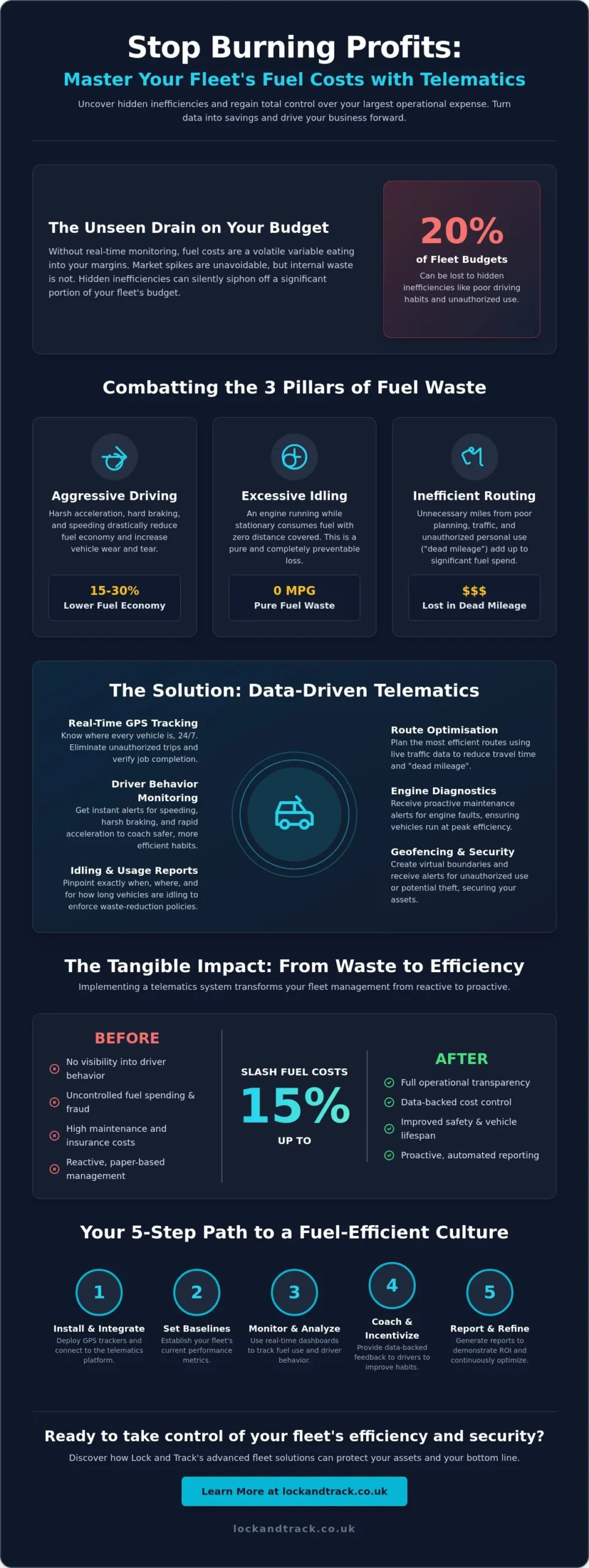
Combatting the Three Pillars of Fuel Waste
Efficiently managing fuel consumption for company cars requires a targeted strike against three specific areas of waste. We categorise these as the ‘Three Pillars’: Driver Behaviour, Vehicle Health, and Trip Planning.
While our previous discussion focused on routing, the human and mechanical factors are equally critical. You cannot achieve total efficiency if your drivers are aggressive or your vehicles are neglected. These pillars represent the most significant opportunities for cost recovery in any modern fleet.
Aggressive driving is the most immediate threat to your fuel budget. Research consistently shows that speeding and harsh braking can increase fuel burn by up to 30%. This is a massive penalty for simple impatience.
Dashcam video telematics adds the vital layer of context that raw data lacks. It allows you to see if a driver braked hard to avoid a collision or if they are simply driving recklessly. This distinction is crucial for maintaining morale while enforcing high standards of efficiency.
Addressing Driver Behaviour with Data
Data transforms abstract goals into actionable targets. Implement driver scorecards to gamify the driving experience. When you rank drivers based on their efficiency, you tap into a natural competitive drive. The psychological impact is immediate.
Drivers who know their performance is monitored for safety and efficiency tend to self-correct their habits. Use your telematics reports to provide constructive, one-on-one feedback. Focus your coaching on the highest-waste drivers to achieve the most significant impact on your monthly fuel bill.
Proactive Maintenance for Fuel Preservation
A vehicle in poor health is a financial liability. Simple issues like low tyre pressure or a clogged air filter create extra drag and force the engine to work harder. You can use car tracker data to automate your maintenance schedule.
Set alerts based on actual mileage rather than arbitrary dates. This ensures your cars are serviced precisely when they need it. Always insist on professional installation for Thatcham-approved devices.
Correct integration prevents electrical drains on car batteries, ensuring the vehicle’s electrical system remains stable and efficient. This technical vigilance preserves both your assets and your fuel budget.
Implementing a Fuel-Efficient Driving Culture
Technology provides the data, but culture determines how that data is used. Managing fuel consumption for company cars is a collaborative effort between management and drivers. You need a structured approach to turn technical insights into daily habits.
This isn’t just about cutting costs. It’s about building a professional environment where efficiency is the standard. When your team understands that fuel preservation is a shared goal, the results become sustainable over the long term.
A fuel-efficient fleet is also a safer fleet. Smooth acceleration and controlled braking are the hallmarks of both an economical driver and a safe one. Industry data confirms that 74% of fleet professionals using video telematics report improved driver safety.
This reduction in aggressive driving directly correlates with lower accident rates. Over time, this proven safety record allows you to negotiate lower insurance premiums. You aren’t just saving at the pump. You’re reducing the total cost of risk for your entire business.
To achieve these gains, follow this 5-step implementation plan:
- Step 1: Policy Creation. Define clear standards in your employee handbook.
- Step 2: Technology Integration. Deploy telematics to capture baseline data.
- Step 3: Real-Time Monitoring. Use live alerts to identify waste as it happens.
- Step 4: Driver Coaching. Provide constructive feedback based on factual reports.
- Step 5: Review and Reward. Evaluate progress monthly and incentivise top performers.
Step 1: Establishing Transparent Fleet Policies
Trust is built on transparency. You must communicate the “why” behind your fuel management initiatives. Explain how reducing fuel burn supports corporate sustainability and ensures vehicle longevity.
Address privacy concerns directly by clarifying that monitoring is a tool for professional safety and asset protection. When drivers understand the business case, they are more likely to support the transition. Clear expectations in the handbook prevent future misunderstandings and set a professional tone from the start.
Step 2: Leveraging Real-Time Feedback
Immediate correction is more effective than a retrospective lecture. Use in-cab alerts to notify drivers of inefficient behaviours, such as excessive idling, the moment they occur. This allows for instant self-correction without management intervention.
Combine these alerts with monthly performance reviews to keep efficiency at the forefront of your operations. Recognising and rewarding the most efficient drivers creates a positive feedback loop that benefits the whole team. To begin transforming your fleet culture with precision data, investigate our fleet tracking and security solutions today.
Lock and Track Fleet Solutions: Security and Efficiency in One
Lock and Track stands as the premier UK provider for nationwide fleet security and monitoring. We recognize that true efficiency is impossible without absolute control over your assets. Managing fuel consumption for company cars requires a solution that addresses both how vehicles are driven and who is driving them.
By combining advanced car immobiliser technology with real-time telematics, we provide a dual-layered defense for your bottom line. Our expertise in managing fuel consumption for company cars allows us to serve fleets of all sizes, from a single vehicle to operations with 10,000 units. We deliver bespoke reporting that translates complex data into clear business advantages.
Our approach is built on the promise of tranquility. You shouldn’t have to worry about whether your fuel is being used for legitimate business or lost to unauthorised use. We provide the technical expertise to secure your vehicles and the analytical tools to optimise their performance.
This synergy ensures your fleet remains a streamlined, protected asset. With our systems in place, you regain the visibility needed to make informed, data-backed decisions for your business stakeholders.
Nationwide Installation, Professional Standards
Our mobile engineers visit your business location anywhere in the UK. This convenience ensures your operations continue without interruption. Every device we install meets Thatcham-approved standards for maximum reliability and compliance.
We understand that your vehicles need to be on the road to earn revenue. Our expert installation processes are designed to minimise fleet downtime while ensuring your security hardware is integrated perfectly. You receive professional, certified protection without the logistical headache of visiting a workshop for Fuel Consumption for Company Cars.
Comprehensive Monitoring for Total Control
Security and efficiency are two sides of the same coin. Integrating Ghost 2 immobilisers with our tracking platforms prevents unauthorised “fuel-burning” journeys before they start. If a vehicle cannot be started by an unauthorised user, your fuel stays in the tank. We also deploy dashcam video telematics to protect your drivers and your business from false insurance claims.
This visual evidence provides the ultimate reassurance in a litigious environment. Our systems give you the power to monitor every mile and protect every asset with total confidence. We invite fleet managers across the UK to secure their assets and their bottom line by partnering with a reliable guardian.
Take Control of Your Fleet’s Future for Fuel Consumption for Company Cars
Efficiency is no longer a luxury. It’s a survival strategy for any modern business. You now have the roadmap to eliminate waste and protect your margins from rising energy costs.
By combining real-time telematics with a proactive driving culture, you transform your fleet into a high-performance asset. Managing fuel consumption for company cars requires more than just intent; it requires the right technical partner to provide visibility and security.
Lock and Track provides the professional expertise you need to succeed. We are specialists in Ghost 2 immobilisers and S5/S7 trackers, ensuring your vehicles are both efficient on the road and protected from theft.
Our Thatcham-approved engineers provide nationwide mobile installation at your workplace, supporting fleets ranging from 1 to 10,000 vehicles. We deliver the bespoke reporting and technical reliability required to secure your bottom line.
Secure your fleet and start saving fuel today with Lock and Track. Take the first step toward a more profitable and secure future for your business.
Frequently Asked Questions
What is the best way to monitor fuel consumption for a small fleet of company cars?
The most effective method is implementing an integrated telematics system that syncs with your fuel card data. This combination provides a complete picture of where and when fuel is purchased versus how it’s actually consumed on the road. Manual logs are prone to error and don’t capture real-time inefficiencies like engine idling or aggressive acceleration.
Can fleet tracking software actually reduce my monthly fuel bill? (Fuel Consumption for Company Cars)
Yes, fleet tracking software can reduce fuel usage by up to 15% by providing the data needed to eliminate waste. It identifies high-cost behaviours such as unauthorised vehicle use, poor route planning, and excessive idling. When you have total visibility, you can implement targeted coaching that translates directly into lower pump costs every month.
Does aggressive driving really impact fuel consumption that much?
Aggressive driving is one of the largest contributors to fuel waste, potentially lowering fuel economy by 15% to 30% at highway speeds. Frequent speeding, rapid acceleration, and harsh braking force the engine to work harder and burn more fuel. Managing fuel consumption for company cars effectively requires addressing these specific driver behaviours through data-backed monitoring and feedback.
How do I introduce vehicle tracking to my employees without losing trust?
Transparency is the foundation of a successful tracking policy. Introduce the technology by focusing on the benefits to the driver, such as improved safety, automated mileage claims, and enhanced vehicle security with Ghost 2 immobilisers. Clearly explain that the goal is business sustainability and asset protection rather than intrusive surveillance. This professional approach helps build a culture of shared responsibility.
What are the most common causes of fuel waste in company car fleets?
The primary causes of fuel waste are engine idling, aggressive driving habits, and inefficient routing. Unauthorised personal use of company fuel also represents a significant hidden cost for many UK businesses. By using GPS tracking and geofencing, you can identify these leaks in your budget and take immediate corrective action to preserve your capital.
Will installing a tracker or immobiliser affect my vehicle’s warranty?
Professional installation of Thatcham-approved trackers or immobilisers generally does not affect a vehicle’s warranty. Our engineers are specialists who ensure every device is fitted to the highest industry standards. This expert integration preserves the integrity of your car’s electrical system while providing the security and data you need for efficient fleet management.
How does engine idling affect a company’s carbon footprint for Fuel Consumption for Company Cars?
Engine idling produces unnecessary CO2 emissions and pollutants without providing any mileage. It’s a significant barrier to meeting corporate sustainability goals. Reducing idle time is a critical component of managing fuel consumption for company cars, as it simultaneously lowers your environmental impact and your operational expenses. Every minute saved is a step toward a greener fleet.
Is it legal to track company cars for fuel management purposes in the UK?(Fuel Consumption for Company Cars)
Tracking company cars is legal in the UK provided you have a legitimate business interest and comply with data protection laws. You must inform your drivers that tracking is in place and explain how their data will be used. Ensuring your fleet policy is clear and transparent protects both the business and the employees while allowing for professional oversight.