
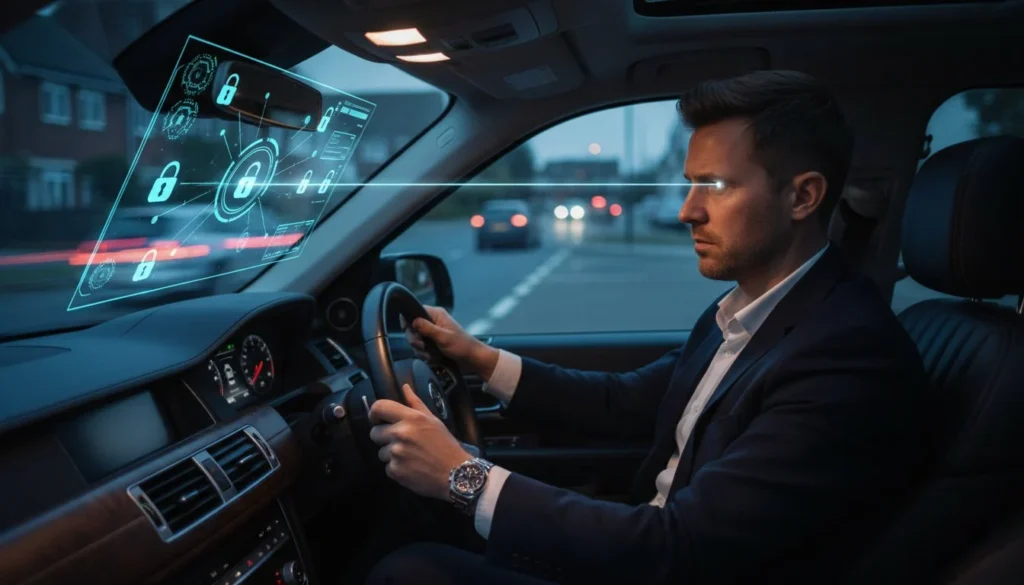
How Ghost Immobilisers Stop Key Cloning UK: 7 Powerful Security Facts
Modern car theft has become increasingly sophisticated. While traditional theft may involve forced entry or stolen keys, criminals can also target electronic vehicle security through techniques such as key cloning and relay attacks. For UK drivers, this makes understanding additional vehicle protection more important than ever.
One security option attracting attention is the Ghost Immobiliser. But how do Ghost Immobilisers Stop Key Cloning, and can they help protect your vehicle if criminals obtain access to a working key or attempt to manipulate its electronic systems?
A Ghost Immobilisers Stop Key Cloning, such as the Autowatch Ghost-II, is a covert CAN-bus immobiliser that requires an authorised driver to enter a personalised sequence using the vehicle’s existing controls. It adds an authentication requirement beyond the vehicle’s factory key system.
In this guide, we’ll explain how key cloning works, how a Ghost Immobiliser adds another layer of protection, and what UK drivers should consider before arranging professional installation.
What Is Car Key Cloning?
Car Ghost Immobilisers Stop Key Cloning is a term commonly used for techniques that copy, emulate or reproduce a vehicle key’s authentication credentials. The exact method depends on the vehicle and its security technology.
Modern vehicles use electronic keys and control systems to verify whether access or starting is authorised. If criminals obtain or successfully emulate the required credentials, they may attempt to gain access to the vehicle or start it.
Key cloning is different from relay theft, although both involve electronic vehicle security.
- Ghost Immobilisers Stop Key Cloning: Attempts to copy or emulate key credentials.
- Relay theft: Uses equipment to relay communication between a keyless vehicle and its key, making the vehicle believe the key is nearby.
- CAN-bus attacks: Target a vehicle’s internal electronic communication network to manipulate vehicle functions.
These methods are not identical, but they illustrate why relying only on the factory key system may not address every possible theft scenario. UK police guidance recommends keeping keys secure and considering additional vehicle-security measures.
How Do Ghost Immobilisers Stop Key Cloning?
The central idea is straightforward: a recognised factory key does not replace the Ghost system’s separate authorisation requirement.
With a compatible, correctly installed Ghost-II, the driver enters a personalised sequence using selected existing vehicle buttons. The system must recognise the correct sequence before normal driving is permitted.
This means that obtaining a working factory key does not, by itself, satisfy the additional Ghost authentication requirement. The system is designed to add a separate barrier against unauthorised driving rather than simply duplicate the factory key’s function.
However, no aftermarket immobiliser should be described as making a vehicle completely theft-proof. The actual level of protection depends on the vehicle, system version, installation and circumstances of an attempted theft.
7 Powerful Ways Ghost Immobilisers Help Prevent Key-Cloning Theft
1. They Add an Extra Driver-Authentication Step
A factory key or keyless system handles the vehicle’s original access and authentication process.
A Ghost Immobiliser introduces another requirement: the driver must provide the correct personalised sequence through compatible factory controls.
This additional step can make unauthorised driving more difficult, even if someone has gained access to the vehicle or obtained a working factory key.
2. They Use Existing Vehicle Buttons
Ghost-II is designed to use compatible controls already fitted inside the vehicle rather than a separate keypad for its standard PIN operation.
Depending on the vehicle, these may include steering-wheel or other factory buttons.
This discreet approach avoids the need to carry another conventional remote solely to enter the normal disarm sequence. The exact controls available depend on vehicle compatibility and installation configuration.
3. They Do Not Require an Additional RF Key Fob for Standard PIN Entry
Some security systems use an additional remote or wireless tag for authentication.
Ghost-II’s standard PIN-based operation uses the vehicle’s existing controls and does not require an extra RF key fob. This is useful because it avoids introducing another conventional remote that must be carried and managed.
It is important to distinguish this from optional features: certain eligible versions may support additional smartphone or tag-based functions. Check the exact product configuration before installation.
4. They Provide a Separate Barrier After Factory-Key Authentication
One of the key advantages of an additional immobiliser is that it serves a different purpose from the original key.
If a thief manages to compromise the factory key system, the Ghost’s separate authentication requirement may still prevent normal driving until the correct sequence is recognised.
This is the main reason Ghost Immobilisers are marketed as an additional defence against key cloning and related electronic theft methods.
The system should nevertheless be treated as one part of a wider security strategy, not as a guarantee against every attack.
5. They Are Designed for Discreet Installation
Ghost-II is designed to integrate with a compatible vehicle’s CAN-bus network and operate without an obvious additional keypad or standard visible LED for its normal PIN process.
Discreet installation can make the system less obvious to a casual observer. However, claims that a device is impossible to find, detect or defeat should be treated cautiously. No security product should be considered invulnerable.
6. They Can Complement Protection Against Relay Theft
Key cloning and relay theft are different techniques, but they share an important concern: criminals may attempt to exploit the vehicle’s normal key-based authentication.
Because Ghost-II’s standard PIN process does not depend on an additional RF key fob, it can provide a complementary layer of protection against certain keyless-theft scenarios.
Owners should still take sensible precautions, including storing keys securely and checking whether their vehicle offers settings to reduce keyless-entry risks.
7. They Can Form Part of a Layered Security Plan
The strongest practical approach is to avoid relying on one device alone.
A suitable security plan might combine:
- A compatible Ghost Immobiliser.
- Secure key storage and sensible keyless-entry precautions.
- A visible steering-wheel lock or other appropriate physical deterrent.
- A suitable vehicle tracker where recovery support is needed.
- Compliance with any insurer-specific security requirements.
Each measure has a different role. An immobiliser helps restrict unauthorised driving, while a tracker can provide location information if a vehicle is stolen. Neither guarantees that theft will be prevented or that a stolen vehicle will be recovered.
Ghost Immobiliser vs Factory Immobiliser
Many modern vehicles already include factory immobilisation and electronic key security. A Ghost Immobiliser is intended to add another layer rather than replace those systems.
| Feature | Factory Immobiliser | Ghost Immobiliser |
|---|---|---|
| Original vehicle equipment | Usually included | Aftermarket installation |
| Authentication | Depends on factory system | Additional personalised sequence on compatible configurations |
| Uses existing vehicle controls | Vehicle dependent | Yes, for standard PIN operation |
| Extra RF key fob for normal PIN entry | Vehicle dependent | Not required |
| Main purpose | Factory vehicle security | Additional immobilisation layer |
| Protection guarantee | No | No |
The exact capabilities of factory security vary by make, model and year. Before deciding whether an aftermarket immobiliser is appropriate, have your vehicle and its existing security features assessed.
Can a Ghost Immobiliser Completely Stop Key Cloning?
It is more accurate to say that a Ghost Immobilisers Stop Key Cloning by add an important barrier against unauthorised driving following certain key-related attacks than to say it makes key cloning impossible.
Key cloning describes different methods, and the results of an attempted theft depend on the vehicle and the technique used. Ghost-II is designed to require its own disarm sequence, but no security system can guarantee protection against every conceivable method of theft.
The most useful question is therefore not whether any device can eliminate all risk. It is whether an additional authentication layer is suitable for your vehicle and security needs.
Is Ghost Immobiliser Suitable for Every UK Car?
No. Compatibility depends on the vehicle’s make, model, year and electronic architecture.
Before booking an installation, check the manufacturer’s current compatibility information for your exact vehicle. Do not assume that a system suitable for one model or model year will work identically on another.
You should also ask the installer about:
- The recommended Ghost system for your vehicle.
- Professional installation and warranty coverage.
- How to set and change your personalised sequence.
- What to do if you forget the sequence.
- How Service/Valet Mode works.
- Whether your insurer has any specific security requirements.
Understanding these points before installation helps you make a more informed decision.
Does a Ghost Immobiliser Affect Car Insurance in the UK?
Insurance requirements vary between providers and individual policies. Installing a Ghost Immobilisers Stop Key Cloning does not automatically guarantee a premium reduction or mean that every insurer will recognise the system in the same way.
Before arranging installation, contact your insurer and ask whether it recognises the exact product, whether it requires installation by a particular installer, and whether any documentation must be provided.
Keep your installation paperwork and update your insurer where required. Always obtain confirmation directly from the insurer rather than relying on general claims about discounts.
How Else Can You Protect Your Car From Key Cloning?
A Ghost Immobiliser can be one part of your vehicle-security plan, but everyday habits remain important.
Keep keys secure. Store them out of sight and away from easy access points such as the front door.
Consider a suitable Faraday pouch. If you have a keyless vehicle, use a tested pouch where appropriate and check that it blocks the key’s signal.
Check that the vehicle is locked. Do not assume it has locked successfully just because you pressed the key button.
Use physical security where appropriate. A steering-wheel lock can provide a visible deterrent.
Consider a tracker. A suitable tracking system may help locate a vehicle if it is stolen, depending on its capabilities and service arrangements.
Report suspicious activity. If you believe your vehicle has been stolen, contact the police and follow any instructions from your tracking provider or insurer.
These precautions reflect a layered approach to vehicle security rather than dependence on one product.
Arrange Professional Ghost Immobiliser Installation
If you’re concerned about key cloning, relay theft or other forms of electronic vehicle theft, an additional immobilisation layer may be worth considering.
Contact a reputable Ghost Immobiliser installer to check compatibility with your exact vehicle. Ask about the recommended system, installation standards, warranty, aftercare and any insurer requirements before booking.
A professional installer should explain how the personalised sequence works, how to maintain the system and how to use Service/Valet Mode when your vehicle needs servicing.
Final Verdict: How Ghost Immobilisers Stop Key Cloning UK
Ghost Immobilisers Stop Key Cloning is an important search topic for UK drivers looking to understand how additional vehicle security works.
A compatible Ghost Immobiliser adds a separate driver-authentication requirement using the vehicle’s existing controls. This can make unauthorised driving more difficult if a criminal has compromised the factory key system, because the Ghost’s own sequence must also be recognised.
However, it is not a guarantee against every theft technique. The most sensible approach is to combine an appropriate immobiliser with secure key management, physical deterrents and a suitable tracker where necessary.
Before buying, check compatibility for your exact vehicle, understand the installation and support arrangements, and confirm any security requirements with your insurer.
Frequently Asked Questions
How do Ghost Immobilisers stop key cloning?
They add a separate authorisation requirement. On compatible Ghost-II installations, the driver enters a personalised sequence using existing vehicle controls before normal driving is permitted.
Can a cloned car key start a car with a Ghost Immobiliser?
A working factory key alone does not satisfy the Ghost’s separate PIN requirement in standard PIN-based operation. The system is designed to restrict normal driving until the correct sequence is recognised, although no security system guarantees protection against every possible attack.
Does a Ghost Immobiliser prevent relay theft?
Ghost-II is designed to add protection against relay theft by requiring separate driver authorisation. Its standard PIN operation does not require an additional RF key fob, but owners should still use appropriate keyless-security precautions.
Does Ghost Immobiliser use a separate remote?
No additional RF key fob is required for the standard PIN-entry process. Eligible versions may offer optional app or tag features, so confirm the configuration being installed.
Is Ghost Immobiliser better than a factory immobiliser?
They perform related but different roles. A Ghost Immobiliser is an additional aftermarket security layer intended to complement the vehicle’s factory security.
Can thieves bypass a Ghost Immobiliser?
No security system should be described as impossible to bypass. Effectiveness depends on the vehicle, installation, system configuration and method of attack.
Is Ghost Immobiliser suitable for every vehicle?
No. Compatibility varies by make, model, year and electronic architecture. Check the manufacturer’s current compatibility information before installation.
Will a Ghost Immobiliser lower my insurance premium?
Not automatically. Ask your insurer whether it recognises the exact product and whether installation affects your policy or premium.
Should I combine a Ghost Immobiliser with a tracker?
They serve different purposes. An immobiliser helps restrict unauthorised driving, while a tracker may support location and recovery if a vehicle is stolen. The right combination depends on your vehicle and security needs.