
Your fleet’s fuel consumption is one of your largest and most volatile operational costs. With prices at the pump in the UK remaining stubbornly high, every wasted litre directly impacts your bottom line. You may suspect driver inefficiency or poor route planning is to blame, but without hard data, it remains a costly assumption. This is precisely why implementing fleet tracking to reduce fuel costs is no longer a luxury, but an essential strategy for financial control and business growth.
This complete UK guide moves beyond guesswork. We provide the definitive breakdown of how GPS tracking technology delivers the actionable intelligence you need to make immediate, measurable savings. You will discover how to pinpoint the exact sources of fuel wastage, from excessive idling to unauthorised journeys, and gain the insights required to improve driver performance. It’s time to transform your biggest operational expense into a significant efficiency saving and safeguard your profit margins.
Key Takeaways
- Stop guessing about fuel waste. Learn how to turn raw vehicle data into measurable savings on your biggest operational expense.
- Identify and correct the specific driving habits-like idling, harsh braking, and speeding-that are draining your fuel budget.
- Effective fleet tracking to reduce fuel costs goes beyond the driver; discover how proactive maintenance alerts directly improve your fleet’s MPG.
- Overcome the main barriers to implementation. This guide provides a framework to calculate your potential ROI and secure driver buy-in.
The Data Black Hole: Why Your Fleet is Wasting Fuel
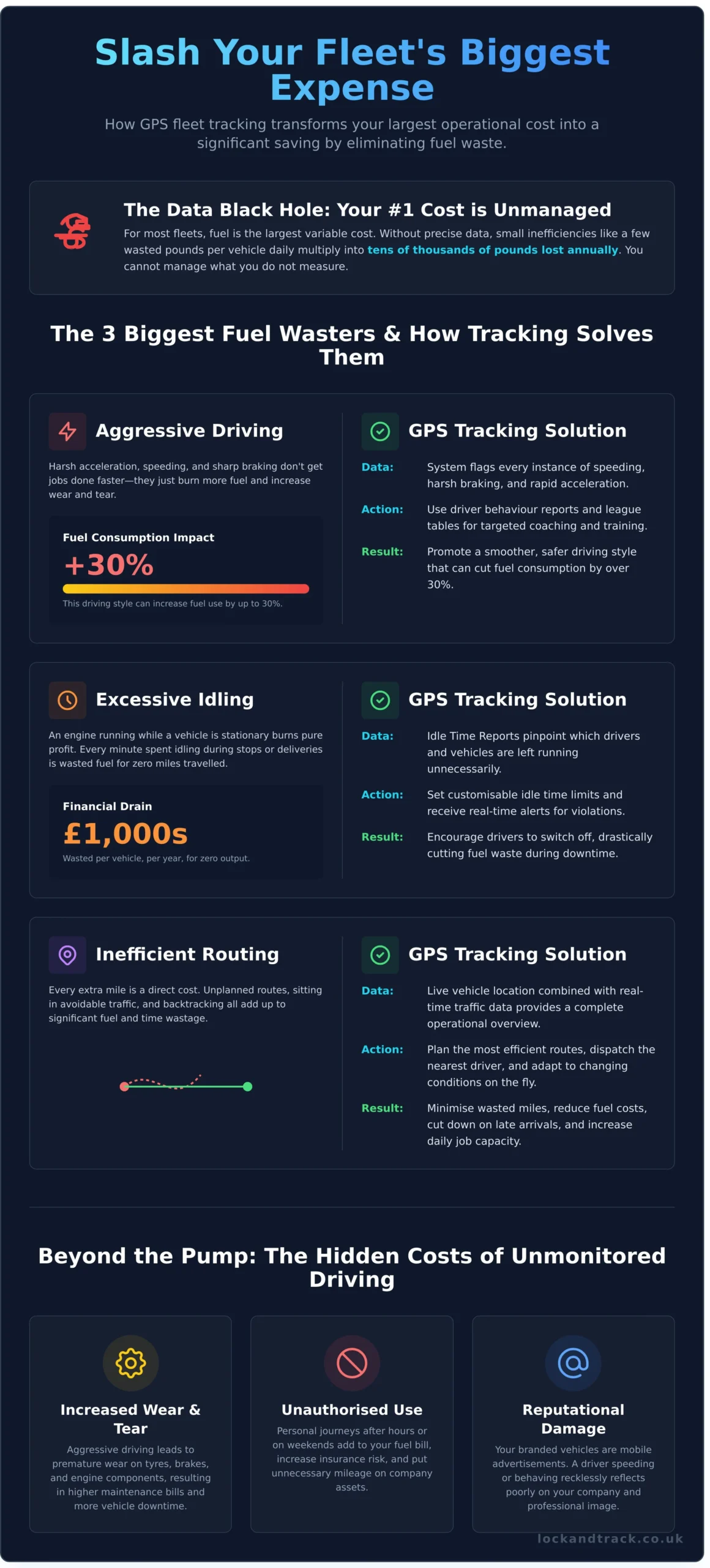
For most businesses, fuel is the single largest variable operating cost. Every litre wasted is a direct drain on your profit margin, yet most companies operate with a critical lack of data on how that fuel is actually used. The old adage is true: you cannot manage what you do not measure. Without precise data, your fleet’s fuel consumption is a black hole, silently consuming your budget through countless small inefficiencies. This is the foundational principle behind modern fuel management systems.
Even a few pounds of wasted fuel per vehicle each day quickly multiplies into tens of thousands of pounds lost across your fleet annually. Understanding these inefficiencies is the first step. Implementing effective fleet tracking to reduce fuel costs begins by shining a light on exactly where your money is going.
The Three Biggest Fuel Wasters
These common behaviours are often invisible without tracking, yet they have a major impact on your bottom line:
- Excessive Idling: An engine running while the vehicle is stationary burns pure profit. Leaving an engine on during stops or deliveries can waste a significant amount of fuel, costing your business thousands per vehicle each year for zero miles travelled.
- Aggressive Driving: Harsh acceleration, speeding, and sharp braking don’t get jobs done faster-they just burn more fuel. Studies show this driving style can increase consumption by up to 30%, putting unnecessary strain on your budget.
- Inefficient Routing: Every extra mile is a direct cost. Unplanned routes, sitting in avoidable traffic, and backtracking all add up. Without optimised planning, your drivers are wasting time and fuel on the road.
The Hidden Costs of Unmonitored Driving
The damage goes far beyond the fuel pump. A lack of oversight creates secondary costs that are just as damaging:
- Increased Wear and Tear: Aggressive driving leads to premature wear on tyres, brakes, and engine components. This results in higher maintenance bills and more vehicle downtime.
- Unauthorised Use: Are your vehicles being used for personal journeys after hours? This unauthorised mileage adds to your fuel bill, increases insurance risk, and puts unnecessary strain on company assets.
- Reputational Damage: Your branded vehicles are mobile advertisements. A driver speeding or behaving recklessly reflects poorly on your company, harming the professional reputation you have worked hard to build.
How Fleet Tracking Turns Raw Data into Real-World Savings
A GPS tracker is more than a dot on a map. It is a constant stream of critical data: vehicle location, speed, and ignition status. This raw information is the foundation. Our telematics software translates these data points into clear, actionable reports. The principle is simple: you cannot manage what you cannot see. Gaining this visibility is the first critical step in using fleet tracking to reduce fuel costs.
By transforming raw data into intelligence, you can identify precisely where fuel is being wasted and take decisive action. This is not about guesswork; it is about data-driven control over your assets and expenses.
Tackling Driver Behaviour Head-On
Wasted fuel often starts in the driver’s seat. Inefficient habits like speeding, harsh braking, and excessive idling directly drain your tank and your budget. Our system monitors these events, turning costly behaviour into manageable data points.
- Problem: Speeding. Driving at 70mph uses up to 25% more fuel than at 50mph. Data: The tracker records vehicle speed against posted limits. Solution: Receive real-time alerts, allowing you to address speeding immediately and enforce safer, more economical driving standards.
- Problem: Harsh Events. Aggressive acceleration and braking wastes fuel and increases wear and tear. Data: The system flags every instance of harsh driving. Solution: Use these reports to coach drivers, promoting a smoother driving style that can cut fuel consumption by over 30%.
- Problem: Idling. An idling engine burns fuel for zero output. Data: Idle Time Reports pinpoint which drivers and vehicles are left running unnecessarily. Solution: Set idle time limits and use league tables to encourage drivers to switch off their engines.
Optimising Every Journey
Inefficient journeys are a direct hit to your bottom line. Wasted miles mean wasted fuel, lost time, and lower productivity. Effective fleet tracking to reduce fuel costs provides the tools to plan and adapt every route for maximum efficiency. The best fleet management software platforms integrate these features seamlessly, giving you total command over your operations.
This is particularly critical for service-based fleets, such as taxi or shuttle services, where route efficiency directly impacts customer satisfaction and profitability. For example, a large-scale operation like tiptopmaxisydney.com.au relies on these principles to manage hundreds of journeys daily across a major city.
- Problem: Inefficient Routes. Drivers may take longer routes out of habit, costing you more in fuel and time. Data: Vehicle location data is used to plan optimal routes. Solution: Use smart route planning to assign jobs based on the shortest, most efficient path, cutting unnecessary mileage.
- Problem: Traffic Delays. A single traffic jam can derail a schedule and burn significant fuel. Data: Live traffic overlays are integrated into the mapping system. Solution: Re-route drivers in real-time to avoid congestion, ensuring schedules are met and fuel is conserved.
Eliminating Unauthorised Use
Unapproved vehicle use is a hidden drain on your resources. Out-of-hours journeys or personal errands add mileage and fuel costs that you shouldn’t have to cover. Our system provides the oversight needed to put a stop to it.
- Problem: Out-of-hours Use. Vehicles are used for personal trips, adding unapproved mileage. Data: The system tracks vehicle location and activity 24/7. Solution: Create geofences (virtual boundaries) around depots or homes and receive instant alerts if a vehicle moves outside of work hours.
- Problem: Timesheet Inaccuracies. Manual timesheets may not reflect actual work hours or mileage. Data: Vehicle journey logs provide precise start, stop, and location data. Solution: Verify driver logs against vehicle data to ensure accurate payroll and eliminate fraudulent claims.
See how our fleet tracking solutions provide total visibility.
Beyond the Driver: Vehicle Health and Fuel Economy
Monitoring driver behaviour is a critical first step, but it is only half the battle. A vehicle in poor condition will waste fuel, no matter how skilled the driver. Effective fleet tracking to reduce fuel costs must therefore extend its vigilance to the health of the asset itself. Modern telematics systems provide this vital link, moving your maintenance strategy from reactive repairs to proactive, cost-saving management.
A well-maintained vehicle operates at peak efficiency. Its engine, tyres, and systems work in harmony to deliver optimal miles per gallon. When a component fails or degrades, fuel economy is one of the first casualties. Fleet tracking systems safeguard against this by giving you direct insight into the vehicle’s operational health.
Proactive Maintenance Scheduling
Forget manual spreadsheets and missed service dates. Our systems automate maintenance scheduling based on precise data, not guesswork. Set alerts triggered by mileage, engine hours, or specific time intervals. This ensures every vehicle receives timely attention, from oil changes to critical safety checks. Empower your drivers with Digital Vehicle Inspection Reports (DVIRs), allowing them to log issues instantly via a mobile app, guaranteeing that nothing is overlooked.
Engine Diagnostics and Fault Codes
Your vehicle’s engine management system is a rich source of data. Our trackers tap directly into it, giving you a remote view of its health. When an engine fault light appears, you receive an instant alert with the specific Diagnostic Trouble Code (DTC). This allows you to address minor issues before they escalate into costly, fuel-guzzling problems. For example, a single faulty oxygen sensor can reduce fuel efficiency by as much as 40%. This inefficiency translates directly into higher operational costs, a figure you can benchmark against the official advisory fuel rates.
Tyre Pressure and Other Factors
Simple factors have a significant impact on fuel use. Under-inflated tyres increase rolling resistance and can decrease MPG by over 3%. While not always tracked directly, the automated maintenance schedules generated by your fleet tracking system ensure that regular tyre pressure checks are never missed. Similarly, the system can help monitor payload data on compatible vehicles, allowing you to manage vehicle load and prevent the unnecessary fuel burn caused by overloading.
Using Reports to Build a Fuel-Efficient Culture
Your fleet tracking system generates a wealth of data. But data alone does not cut your fuel bill. To see a genuine return on investment, you must turn those insights into action. This is how you build a sustainable, fuel-efficient culture that protects your bottom line and enhances driver professionalism.
Effective use of reporting is the most direct way to leverage fleet tracking to reduce fuel costs. It shifts accountability from guesswork to measurable performance, creating a transparent and fair system for improvement.
Key Reports for Fuel Management
Focus your attention on the reports that deliver the most impact. We recommend a weekly or monthly review of these core documents to maintain control over your fuel expenditure:
- Fuel Consumption Report: Directly compare the MPG across similar vehicles in your fleet. A sudden drop in efficiency on one vehicle can signal an urgent maintenance issue, while consistently poor performance may point to an inefficient driver.
- Driver Scorecards: Rank drivers based on key metrics like speeding, harsh braking, and excessive idling. This provides a clear, objective overview of who your most efficient operators are and who requires additional coaching.
- Journey History: Analyse historical routes to identify wasted mileage. Are drivers taking longer, less efficient routes out of habit? This report reveals opportunities to standardise journeys and cut unnecessary fuel burn.
Creating Driver League Tables and Incentives
Transform fuel efficiency from a management directive into a point of professional pride. Use the data from Driver Scorecards to create a monthly ‘league table’. This simple act of gamification fosters friendly competition and encourages drivers to take ownership of their performance.
Reward your top-performing driver with a tangible incentive, such as a £50 voucher or a premium vehicle allocation for a month. This positive reinforcement demonstrates that efficiency is valued and creates a culture of continuous improvement, not punishment.
Data-Driven Driver Coaching
Vague feedback is ineffective. Fleet tracking reports allow you to have precise, evidence-based conversations with your team. Instead of saying, “You need to stop idling so much,” you can say, “Your report shows 45 minutes of idling on Tuesday’s delivery to Birmingham, which cost an estimated £5 in wasted fuel.”
This approach removes emotion and focuses on facts. Frame these one-on-one meetings around safety and professional development. Use the data to highlight specific moments where a change in driving style would not only save fuel but also reduce risk. This is the foundation of a safer, more profitable fleet. Ready to turn data into savings? Discover how Lock and Track can help.
Calculating ROI and Gaining Driver Buy-In
Implementing any new system raises two critical questions: what is the cost, and how will the team react? The key is to frame fleet tracking not as an expense, but as a strategic investment in efficiency and security that benefits both the business and its drivers. Addressing these points directly builds trust and ensures a smooth transition.
Estimating Your Potential Fuel Savings
The return on investment is often faster than you think. Most businesses see a 10-15% reduction in fuel usage after implementing a tracking system. Consider a small fleet of five vans, each with a monthly fuel bill of around £400. That’s a total spend of £2,000.
A conservative 10% saving immediately puts £200 back into your business every month. In most cases, the tracking system costs significantly less, meaning it pays for itself from day one. Using fleet tracking to reduce fuel costs delivers a clear, measurable financial benefit that is impossible to ignore.
Communicating the ‘What’s In It For Me?’ to Drivers
Driver buy-in is crucial. Position the system as a tool that protects and supports them, not one that simply monitors. The benefits for your team are tangible:
- Safety and Security: GPS data can exonerate a driver from false accusations after an incident. It also provides vital lone worker protection and ensures a rapid response in an emergency or breakdown.
- Fairness and Proof: The system provides irrefutable proof of arrival times and job duration, resolving customer disputes and ensuring overtime is always paid accurately. No more arguments, just facts.
- Efficiency on the Road: Real-time traffic data and smarter routing mean less time sitting in queues and more time on productive tasks. It makes their day easier and less stressful.
Implementing a Transparent Tracking Policy
Trust is built on transparency. Be direct about what you are tracking and why. Explain that the goal is to improve safety, secure company assets, and operate more efficiently-benefits that strengthen the entire business. When your team understands how effective fleet tracking to reduce fuel costs is, they see it as a tool for job security, not scrutiny. Ready to see the numbers for your fleet? Request a personalised quote and see your potential ROI.
Investing in professional development can be another powerful tool for career growth. For managers looking to enhance their strategic skills with formal qualifications, you can visit Camford International College to learn about UK-accredited postgraduate programmes available online for working adults.
Take Control: Turn Fleet Data into Fuel Savings
Uncontrolled fuel spend is a direct threat to your bottom line. As this guide has shown, the solution is clear: turn raw data into real-world savings. By monitoring driver behaviour, optimising routes, and ensuring vehicle health, you take back control. Implementing a professional system for fleet tracking to reduce fuel costs is the most effective way to protect your profit margins in today’s market.
At Lock and Track, we provide the tools to make this happen. Our solutions are built for UK businesses and are fully scalable, from a single vehicle to a fleet of 10,000. You are supported by nationwide installation from our Thatcham-approved engineers and a dedicated, UK-based expert team. This is not just tracking; it’s total fleet intelligence designed for maximum ROI.
Stop letting high fuel prices dictate your success. Take decisive action. Get a tailored fleet tracking quote and start cutting fuel costs.
Frequently Asked Questions
How much can a UK business realistically save on fuel with fleet tracking?
UK businesses using fleet tracking to reduce fuel costs can realistically expect savings of 10% to 20%. This is achieved by optimising routes, eliminating excessive idling, and curbing unauthorised vehicle use. For a fleet spending £10,000 per month on fuel, that translates to a direct saving of £1,000 to £2,000. It is a practical, data-driven method to protect your bottom line and gain a competitive edge.
Will a GPS fleet tracker work on all my vehicles, including vans and HGVs?
Absolutely. Our GPS tracking systems are engineered for versatility and can be installed across your entire mixed fleet. From light commercial vans to heavy goods vehicles (HGVs) and even specialised plant machinery, we provide a unified solution. This ensures you have complete visibility and control over every asset, safeguarding your entire operation under one secure, easy-to-manage platform. Your whole fleet is protected.
Is it difficult to install a fleet tracking system across multiple vehicles?
Installation is straightforward and efficient. Our nationwide network of Thatcham-approved engineers handles the entire process for you, ensuring a discreet and professional fitment with minimal disruption to your operations. We coordinate the schedule to suit your business needs, getting your vehicles equipped and your system operational quickly. We manage the complexity so you can focus on your business, secure in the knowledge that your assets are protected.
How exactly do you use tracking data for effective driver training?
Tracking data provides objective, actionable insights for driver training. You can identify specific behaviours like harsh braking, rapid acceleration, and excessive speeding that waste fuel. Use these reports to have constructive, evidence-based conversations with drivers. By setting clear benchmarks and monitoring improvements, you can cultivate a safer, more efficient driving culture across your team, directly reducing wear and tear and fuel consumption.
Do UK insurance companies offer premium discounts for fleets with GPS tracking?
Yes, many UK insurers offer significant premium discounts for fleets equipped with GPS tracking, particularly Thatcham-approved systems. The technology drastically improves the chances of vehicle recovery after a theft, which reduces the insurer’s risk. This makes your fleet a more attractive proposition, often leading to lower annual premiums. It is a proactive step that enhances security and delivers a clear financial return on your investment.
Can fleet tracking help with fuel card fraud?
Fleet tracking is a powerful tool to combat fuel card fraud. By cross-referencing fuel card transaction data with your vehicle’s GPS location and time logs, you can immediately flag discrepancies. If a card is used when the designated vehicle is miles away, you have definitive proof of misuse. This simple check eliminates a common source of financial loss and safeguards your assets against internal theft, ensuring fuel is only used for legitimate business purposes.