
Imagine you’re sitting in the driver’s seat, late for a meeting, but your engine won’t turn over because you’ve forgotten your unique PIN sequence. It’s a moment of high stress where you feel like a stranger in your own car. We know that the same TASSA-verified technology that stops the relay thefts responsible for 94% of keyless car crimes can feel intimidating when you’re the one trying to get moving. You aren’t alone in this frustration, and it’s a common concern for many high-end vehicle owners.
This guide ensures you’re never left stranded. You’ll learn exactly how to use your ghost immobiliser emergency override code to bypass the system safely and regain immediate control. We’ll provide the professional clarity you need to distinguish between your daily PIN and this vital fail-safe. We will cover where to find your security card, the precise sequence for entering the code, and the specific steps to take if you’ve lost your emergency credentials. This is your definitive 2026 roadmap to navigating your vehicle’s security with absolute confidence and peace of mind.
Key Takeaways
- Identify your unique six-digit fail-safe code and understand how it acts as a critical backup when your daily PIN sequence isn’t working.
- Master the step-by-step process for entering your ghost immobiliser emergency override code using existing vehicle buttons or pedals to start your engine.
- Learn to distinguish between emergency overrides, service modes, and valet settings to maintain peak security while your vehicle is in for maintenance.
- Find out the necessary steps for professional technical intervention if your emergency security card is misplaced or stolen.
- Understand why TASSA-accredited installation is the standard required for both system reliability and high-level insurance compliance.
What is the Ghost Immobiliser Emergency Override Code?
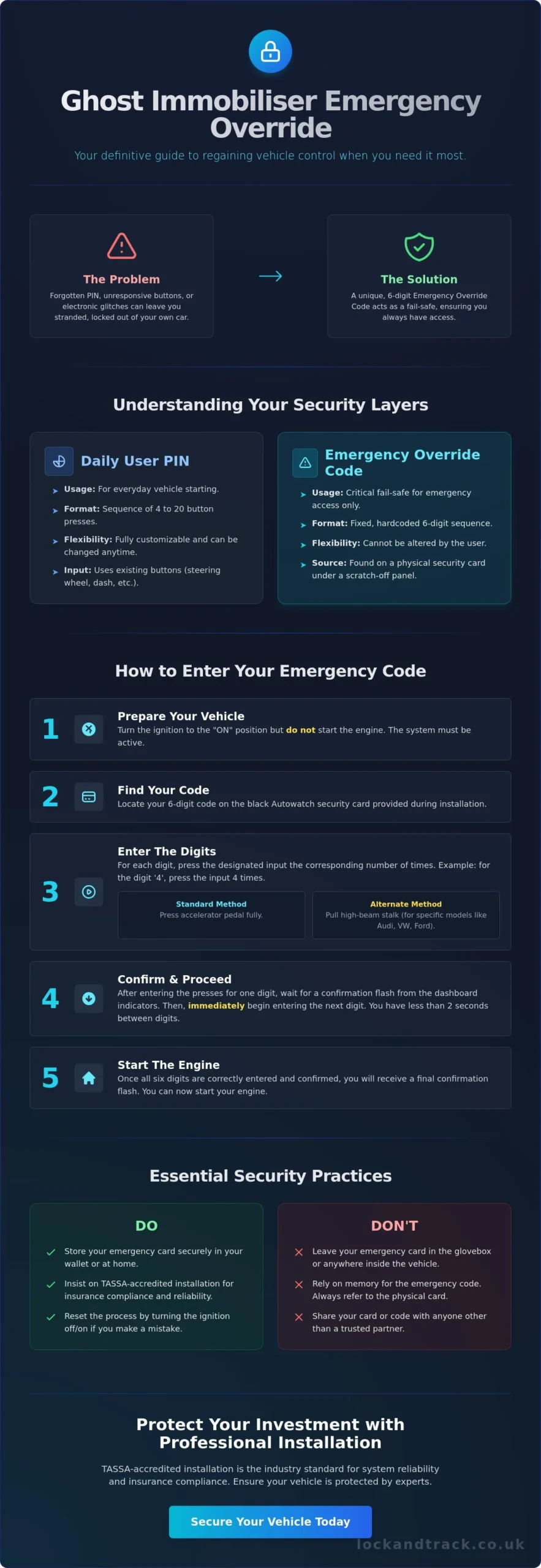
The ghost immobiliser emergency override code is your ultimate safety net. It’s a unique, six-digit fail-safe code generated specifically for your unit at the time of professional installation. While your daily PIN sequence is designed for convenience and stealth, the emergency code exists to ensure you’re never permanently locked out of your vehicle. You’ll find this code hidden under a scratch-off panel on the black Autowatch emergency card provided by your engineer. This card is a vital piece of your vehicle’s electronic security device package and should be treated with the same care as your logbook or spare keys.
The purpose of this code extends beyond simple memory lapses. Sometimes dashboard buttons can become unresponsive due to wear, or the vehicle’s interior electronics might experience a temporary glitch. In these rare scenarios, the override protocol allows you to bypass the immobilisation phase and start the engine immediately. It isn’t a “master code” that works on every Ghost unit; it’s cryptographically bound to your specific hardware. This ensures that even if someone knows the general override procedure, they cannot access your vehicle without your specific digits.
Emergency Code vs. User PIN: Key Differences
The daily user PIN is flexible. It allows for a sequence of 4 to 20 button presses using various controls on your steering wheel or dash. You can change this PIN whenever you feel the need to refresh your security. In contrast, the ghost immobiliser emergency override code is a static, hardcoded six-digit sequence that cannot be altered. While you might memorize your PIN, you shouldn’t rely on memory for the override. Store the card in a secure location at home or in a wallet you carry with you. With 375,048 vehicles reported stolen across England and Wales in 2024, the physical security of this card is paramount. Don’t leave it in the glovebox.
Why Thieves Cannot Use the Override Protocol
A common fear is that a thief might find a way to guess or crack the override sequence. This is technically impossible via the vehicle’s diagnostic port or external hacking tools. The protocol requires physical possession of the unique card. Because the sequence is complex and varies by vehicle model, there’s no generic bypass for criminals to exploit. The Ghost operates on a hidden layer of the CAN-bus network, creating a digital barrier that cannot be bypassed by standard signal boosting or key cloning techniques. This technical isolation means the override is only accessible to the person holding the physical card, maintaining the integrity of your TASSA-verified protection.
Step-by-Step: How to Enter Your Ghost Emergency Code
Entering your ghost immobiliser emergency override code requires focus and precision. Before you begin, ensure the ignition is in the “ON” position but do not attempt to crank the engine. The system needs to be active to receive your inputs via the CAN-bus network. Modern vehicle cybersecurity challenges mean these systems are designed to be rigorous; if the engine is running or the ignition is off, the sequence will not register. This isn’t a task to rush while distracted. Take a breath and focus on the rhythm of the inputs to ensure a successful start.
The code is a simple translation of digits into physical actions. If your first digit is a ‘3’, you will perform the input action three times. Timing is the most critical factor here. You have a strict 2-second window between each digit entry. If you pause for too long, the system resets, and you’ll need to start the entire sequence from the beginning. This prevents accidental disarming and ensures that only the authorized owner can bypass the security layer.
The Standard Accelerator Pedal Method
For the majority of vehicles, the accelerator pedal is the primary input device. Press the pedal firmly to the floor for the number of times indicated by your first digit. The pedal must travel its full range of motion to ensure the sensor registers the press. After you finish the presses for that specific digit, wait for a confirmation flash from the dashboard stop-lamp or indicator. Once you see that single flash, move immediately to the next digit. Repeat this process until all six digits of your ghost immobiliser emergency override code are entered. If you make a mistake, turn the ignition off and on again to clear the cache and try again.
High-Beam Nuances for Specific UK Models
Certain UK vehicle platforms, particularly those from Audi, VW, and Ford, may not support accelerator pedal inputs for this protocol. In these cases, you’ll use the high-beam flash stalk instead. Pull the stalk toward you to toggle the flash for each digit count. This specific variation is determined during the initial ghost immobiliser installation based on your car’s specific wiring and software architecture. If the pedal method doesn’t trigger a confirmation flash, the high-beam method is your likely alternative. It functions with the same timing rules and confirmation flashes as the pedal method.
After the final digit is entered and confirmed, the dashboard will provide a unique double-flash signal. This indicates the immobiliser is now disarmed. You can then start the engine as normal. Once the engine is running, the system will remain disarmed until the next time you turn off the ignition. If you’re unsure which method your car uses, it’s best to consult a professional who can verify your setup. You can always speak with a security specialist to ensure your fail-safe protocols are correctly configured for your specific make and model.
Emergency Override vs. Service Mode: Which Do You Need?
Understanding the distinction between these two operational states is vital for maintaining your vehicle’s security. An emergency override is a reactive measure. You use the ghost immobiliser emergency override code when you’re stranded because the PIN is forgotten or a button has failed. Service Mode, often called Valet Mode, is a proactive setting. You activate this before handing your keys to a mechanic for an MOT or a valet for cleaning. It’s about maintaining control and foresight. While the emergency code is a one-time bypass to get you moving, Service Mode is a temporary suspension of security designed for convenience during professional maintenance.
Valet Mode allows the vehicle to be driven and restarted without the PIN sequence, but it has strict safety parameters. The car must stay below 31mph. If the vehicle is driven above this speed for more than 15 minutes, the Ghost system automatically re-arms. This prevents someone from driving your car away permanently if you forget to turn the mode off. Never leave your vehicle in Service Mode indefinitely. Doing so effectively disables your protection, leaving your asset vulnerable to the very relay thefts that account for 94% of keyless car crimes. Always ensure your system is fully armed once the service is complete.
Entering and Exiting Valet/Service Mode
To activate Service Mode, enter your normal PIN sequence. Once confirmed by the double-flash, press the service button five times. The dashboard will flash five times to confirm the mode is active. When you receive your car back, the exit protocol is simple. Enter your PIN as you usually would while the ignition is on. The system will flash twice, confirming it’s back in armed mode. Always verify this before leaving the garage to ensure your 97% theft prevention rate remains intact. This simple check guarantees that your vehicle returns to its status as a protected asset.
Common Troubleshooting During Entry
What to Do if You Lose Your Ghost Emergency Card
Losing your emergency card is a high-anxiety scenario, but it’s one that requires a calm, professional response. For absolute security, Autowatch does not maintain a central database of every ghost immobiliser emergency override code issued. This is a deliberate design choice. If a master list existed, it would represent a significant vulnerability for hackers to target. While this ensures your vehicle remains a fortress, it means that if you lose both your daily PIN and your physical card, the system cannot be bypassed through a simple phone call or email. You’re effectively locked out of your own security system until a specialist intervenes.
Without the card, your vehicle remains immobilised and protected. This is the reality of high-level asset preservation. You won’t be able to start the engine, and standard recovery services won’t be able to bypass the digital block. This protocol exists to protect you from sophisticated thieves who might try to social-engineer their way into a reset. If you find yourself in this position, you must contact a TASSA-registered professional to begin the recovery process. If you need immediate assistance with your security setup, you can contact our technical team for expert guidance.
The Engineer Recovery Process
A recovery visit is not a remote software fix. A certified engineer must physically access the Ghost unit hidden within your vehicle’s wiring to perform a hardware reset. This is a secure, manual process that clears the existing memory and allows for the generation of a new sequence. Before any work begins, the engineer will require strict proof of ownership, typically including your V5C logbook and valid photo identification. These rigorous checks are essential for maintaining the integrity of the car immobiliser system and ensuring that the security of your vehicle is never compromised during a reset.
Secure Storage Best Practices
The best way to handle a lost card is to ensure you have a secure backup before it goes missing. Don’t rely on a single piece of plastic. We recommend storing your ghost immobiliser emergency override code in an encrypted password manager. This provides a digital fail-safe that you can access from any device. Avoid the common mistake of taking a photo of the card that syncs to an unsecure cloud account; this creates a digital trail that could be exploited. Keep the physical card in a home safe or a locked cabinet. Never store it in the glovebox or anywhere else inside the vehicle, as this gives a thief everything they need to bypass your protection if they gain entry to the cabin.
Professional Support and Nationwide Ghost Installation
Professional installation is the bedrock of your vehicle’s defense. A security system is only as effective as the technician who integrates it into your car’s complex electronics. This is why TASSA accreditation is a non-negotiable standard for modern vehicle protection. TASSA-verified installers are vetted and held to high industry standards, ensuring that your system is recognized by major UK insurers. When you choose an expert for the job, you aren’t just buying hardware; you’re securing a reliable fail-safe. Our nationwide mobile service brings this expertise directly to your home or workplace, providing a seamless setup without disrupting your schedule.
Lock and Track engineers focus on the technical precision required for a flawless installation. We ensure that the Ghost 2 Immobiliser – Autowatch communicates perfectly with your vehicle’s CAN-bus network. This careful integration is what makes the system invisible to the diagnostic tools used by criminals. It also ensures that your ghost immobiliser emergency override code is correctly initialized. Having professional support means you have a partner in your vehicle’s security, ready to provide technical assistance if you ever encounter issues with your PIN or override sequence.
The Importance of a Professional Handover
A successful installation concludes with a comprehensive handover. Our engineers don’t just fit the device and leave; they walk you through the practical use of the system. You’ll be guided through the process of entering your ghost immobiliser emergency override code until you feel completely confident. We verify that every steering wheel button, dash switch, or pedal is mapped correctly for your specific make and model. This is also the perfect time to discuss how to integrate thatcham approved vehicle trackers uk into your security strategy. A layered approach ensures that even if one layer is challenged, your asset remains protected.
Securing Your Vehicle for 2026
The landscape of vehicle theft is evolving rapidly. With relay attacks and key cloning becoming more sophisticated, the Ghost 2 remains the gold standard for preventing unauthorized engine starts. However, total peace of mind often comes from combining immobilisation with active monitoring. Pairing your system with a high-performance car tracker creates a dual-layer defense. While the Ghost stops the car from being driven away, the tracker ensures you can locate the vehicle if it’s moved by other means, such as a low-loader. This proactive strategy is the most effective way to safeguard your investment. Protect your vehicle today with a professional Ghost 2 installation from Lock and Track.
Master Your Vehicle Security for the Road Ahead
Mastering your vehicle security is about more than just hardware; it’s about maintaining absolute control over your asset. We’ve established that your ghost immobiliser emergency override code is a critical fail-safe designed to keep you moving when technology or memory falters. By understanding how to enter this sequence and where to store your credentials securely, you transform a complex electronic barrier into a manageable, reliable tool for daily protection. Proactive preparation ensures that a forgotten PIN never becomes a permanent obstacle to your journey.
Our team of Thatcham approved security specialists is here to ensure your vehicle remains a fortress against modern theft methods. We provide a nationwide mobile fitting service through our TASSA accredited installers, delivering expert care directly to your door. Don’t wait for a vulnerability to become a crisis. Secure your vehicle with a Ghost 2 Immobiliser and expert UK installation to experience the tranquility of professional asset protection. You’ve gained the knowledge to manage your system with confidence; now give your car the guardian it deserves.
Frequently Asked Questions
Where can I find my Ghost immobiliser emergency override code?
The ghost immobiliser emergency override code is located on the unique Autowatch emergency card given to you during installation. You’ll find a scratch-off panel on the back that hides the six-digit sequence. It’s vital to keep this card in a secure location at home rather than in your glovebox. If you haven’t done so already, scratch the panel now and record the code in an encrypted password manager for easy, secure access.
What should I do if my Ghost override code is not working?
Check that your ignition is in the “ON” position without the engine running. Timing is critical; you must wait for the dashboard confirmation flash before entering the next digit. If the accelerator pedal doesn’t trigger a response, your vehicle might require the high-beam flash method instead. If you’ve tried both methods and the system is still locked, your vehicle battery voltage might be too low for the CAN-bus to communicate effectively.
Can I change my Ghost emergency override code?
You cannot change the emergency override sequence yourself. Unlike your daily PIN, which is customizable, the override code is a fixed six-digit sequence hardcoded into the unit’s firmware. This ensures that the code always matches the physical security card provided at the time of fitting. If you’re concerned about the security of your current code, the only way to get a new one is to have a professional engineer reset the entire unit.
How many times can I attempt to enter the override code?
The system allows for three consecutive failed attempts before triggering a lockout period. This ghost immobiliser emergency override code fail-safe prevents someone from trying to guess the sequence through trial and error. If you reach the limit, you must leave the ignition off for several minutes to reset the timer. Always take your time and wait for the dashboard flashes to confirm each digit to avoid accidentally triggering this necessary security delay.
Does using the emergency code disable the immobiliser permanently?
Using the override code only provides a one-time bypass for the current ignition cycle. The system will automatically re-arm the moment you turn the engine off. This ensures that your vehicle remains protected even if you’ve had to use the fail-safe to get home. You should take the opportunity to reset your daily PIN once you’re in a safe location, as the immobiliser will expect a valid sequence for the next start.
Is it safe to tell my mechanic the emergency override code?
What happens if I lose my Ghost 2 emergency card?
A lost card requires a physical hardware reset by a certified TASSA engineer. There’s no remote way to recover the code because no master list exists for security reasons. The engineer will need to verify your identity and vehicle ownership before they can access the unit and generate a new sequence for you. This strict protocol ensures that your immobiliser remains a reliable guardian that can’t be compromised by simple social engineering or unauthorized reset requests.
Can a thief bypass the Ghost immobiliser if they find the emergency card?
If a thief finds the card, they have the exact sequence needed to bypass the system. This makes the physical card as valuable as your car keys. You should never store the card in the vehicle, especially not in the glovebox or door pockets. The Ghost is designed to be invisible, but the emergency card is a tangible link to that protection. Treat it with the same level of security as your banking credentials or home keys.