
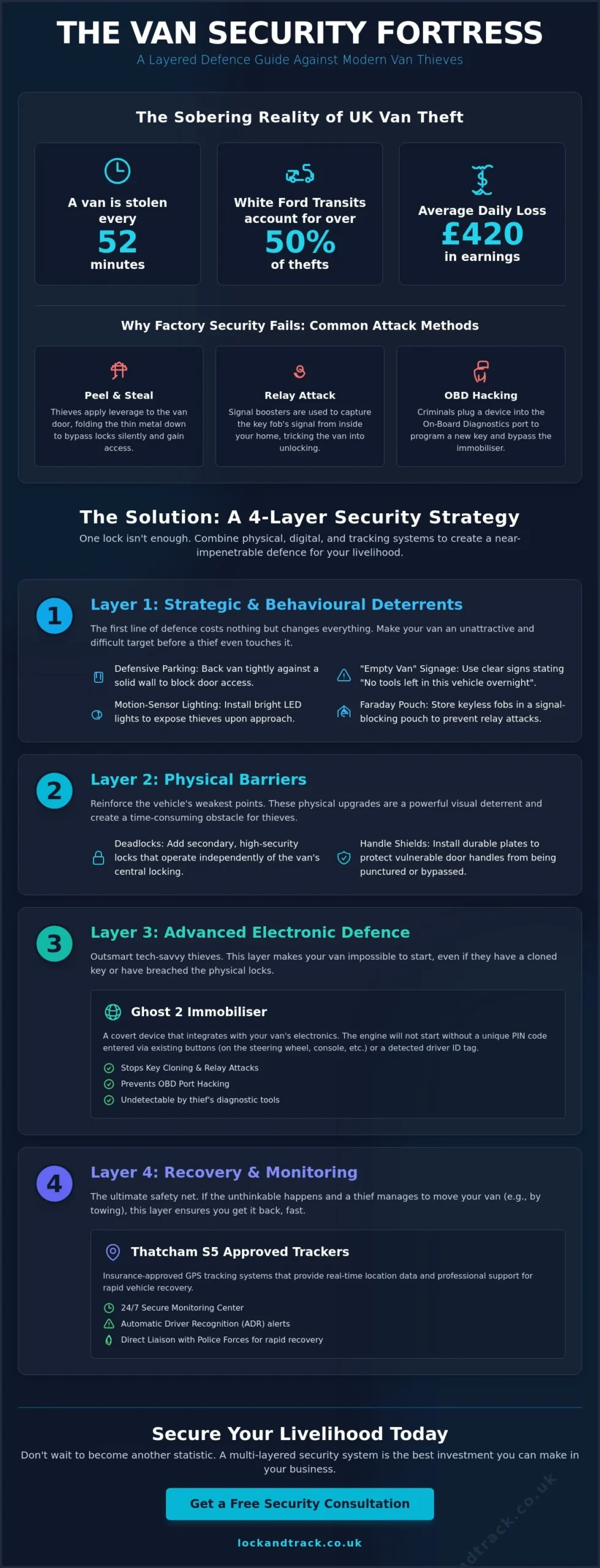
Did you know that in 2025, a van was stolen every 52 minutes across the UK? If you drive a white Ford Transit, the statistics are even more sobering, as these models account for over half of all targeted thefts. We understand that your van is more than just a vehicle. It’s your mobile workshop and your livelihood. Losing it doesn’t just mean a trip to the insurance office; it means an average loss of £420 in daily earnings and the massive headache of replacing specialized tools. You’re likely searching for how to stop my van being broken into because you need a solution that actually works against modern, tech-savvy thieves.
This guide provides the most effective, layered security strategies available in 2026 to keep your assets exactly where they belong. We’ll help you navigate the new legal landscape of the Crime and Policing Act 2026 and choose the right technology to deter even the most sophisticated relay attacks. From the physical strength of deadlocks to the digital protection of S5 trackers and immobilisers, you’ll learn how to build a fortress around your business and regain your peace of mind. We’ll show you exactly which upgrades are worth the investment to ensure your tools stay safe and your van stays on the road.
What this guide covers:
- Why a layered security strategy is the only viable defense against modern professional van thieves.
- Strategic parking techniques and psychological deterrents that stop thieves before they touch your vehicle.
- The best physical barriers, including deadlocks and handle shields, to prevent “peel and steal” attacks.
- Actionable steps on how to stop my van being broken into using a Ghost 2 Immobiliser to prevent unauthorized engine starts.
- How Thatcham-approved trackers provide 24/7 monitoring and coordinate with police for rapid asset recovery.
The Reality of Van Theft in 2026: Why Factory Security Fails
Layered security is a strategy that combines physical hardware, digital immobilisation, and real-time tracking to ensure your vehicle remains protected even if one system is breached. Relying solely on factory-fitted alarms is a mistake in 2026. Most standard van doors are surprisingly thin and flexible. Thieves exploit this using the “Peel and Steal” method; they apply leverage to the top of the door and literally fold the metal down to access the cargo area. It’s a silent, low-tech attack that bypasses central locking in seconds. According to recent Motor vehicle theft statistics, professional gangs have moved beyond simple smash-and-grab tactics.
Digital theft is equally concerning. Your van’s On-Board Diagnostics (OBD) port is designed for mechanics, but thieves use it to program blank keys or bypass the factory immobiliser entirely. By plugging a small device into this port, they can start your engine and drive away in under a minute. Additionally, relay attacks allow thieves to intercept the signal from your key fob while it sits safely on your kitchen counter. They use signal boosters to trick the van into thinking the key is present, unlocking the doors without ever touching your keys. If you want to know how to stop my van being broken into, you must first accept that your factory security is no longer a deterrent for a professional.
The Financial Impact: More Than Just Stolen Tools
The immediate loss of tools is devastating, but the hidden costs often cause more damage to a business. You face rising insurance premiums and expensive excess payments. Most tradespeople lose an average of £420 in daily earnings for every day their van is off the road. The stress of losing your primary asset can be overwhelming. For business owners managing multiple vehicles, implementing fleet tracking solutions UK is a critical step to mitigate these operational risks and maintain oversight.
Digital Vulnerabilities: Key Cloning and Signal Boosting
Modern thieves now carry £20 electronic devices that can clone a key signal in seconds. Keyless entry systems are often the weakest link because they rely on a constant proximity signal that is easily hijacked. To counter this, secondary authentication is essential. You need a system that requires more than just a key signal to start the engine. Understanding how to stop my van being broken into requires moving toward high-tech solutions that demand a unique PIN or driver tag before the vehicle will move.
Layer 1: Strategic Parking and Behavioural Deterrents
Effective security begins before you even step out of the cab. While high-tech hardware is essential, your daily habits create the first barrier that a thief must overcome. If you are looking for immediate ways on how to stop my van being broken into, start with defensive parking. This technique involves backing your van tight against a solid wall, sturdy fence, or even another vehicle. By physically blocking the rear and side doors, you make it impossible for a thief to use the “peel and steal” method or even reach the handles. It is a simple, zero-cost habit that provides instant physical protection.
Psychology also plays a massive role in deterrence. The “Empty Van” tactic involves placing clear signage on your doors stating that no tools are left in the vehicle overnight. While some professional thieves might ignore this, it creates a layer of doubt for the opportunist. Lighting is another critical psychological tool. Motion-sensor LEDs are far more effective than static streetlights. A sudden, bright flash of light creates an immediate sense of exposure, often scaring off a criminal before they touch the door. For those with keyless entry systems, using a Faraday pouch is a mandatory behavioral change. These inexpensive pouches block the signals that thieves intercept during relay attacks, keeping your digital key safe while you’re inside your house.
The “Park Mark” and Secure Parking Criteria
When working on-site in unfamiliar areas, look for the “Park Mark” symbol. This signifies a car park has been vetted by the police for safety standards. However, don’t assume every corner of a secure lot is safe. Always check for CCTV blind spots behind pillars or in poorly lit corners. Professional thieves know exactly where the cameras can’t see. Additionally, never leave your van running while making quick deliveries. It takes less than five seconds for a thief to jump into an idling cab and drive away with your entire livelihood. While these habits form a strong foundation, professional GPS van trackers provide the ultimate layer of security for high-risk locations.
Internal Habit Changes for Tradespeople
Your internal routine is just as important as where you park. Establish a strict “Clear Out” routine for high-value specialist equipment that is impossible to replace quickly. If you must leave tools inside, invest in an internal security cage or a bolted-down tool vault. These create a secondary barrier that requires heavy power tools to breach, making a quick theft impossible. Finally, mark every piece of equipment with forensic markers like SmartWater or DNA kits. This makes stolen tools much harder to sell and provides definitive proof of ownership if the police recover your gear after a raid. Understanding how to stop my van being broken into is about making your vehicle the least attractive target on the street.
Layer 2: Strengthening the Shell with Physical Barriers
Another critical upgrade is the installation of handle shields, often referred to as Armaplates. Thieves frequently use a technique called “spiking,” where they drill a small hole through the door skin to reach the internal latch mechanism. A stainless steel shield encases the handle area, making this type of attack nearly impossible. Don’t overlook the simple deterrents either. A high-visibility steering wheel lock is a classic tool that remains effective in 2026. It signals to an opportunist that your van will take too much effort to steal, often convincing them to move on to an easier target.
Protecting the underside is just as vital as the doors. Catalytic converter theft remains a major issue because thieves can cut them out in under 60 seconds. Installing a dedicated “Cat-lock” or a protective cage around the exhaust system is the only way to prevent this expensive repair and the subsequent downtime for your business.
To explore a broader range of protective hardware and automotive enhancements for your vehicle, you can find out more about the professional accessories available to help secure and upgrade your van.
Upgrading Your Van Door Security
Hook locks are the gold standard for door security. Unlike a standard deadlock that throws a straight bolt, a hook lock engages a curved bolt into a bracket in the van frame. This design specifically counters the “peel and steal” method by physically anchoring the door to the body. Professional fitting is non-negotiable here. A poorly installed lock can weaken the door’s structural integrity, making it easier to breach. For total protection, we recommend linking these physical barriers with a digital car immobiliser strategy to stop the vehicle from being driven even if a door is compromised.
Protecting Windows and Access Points
Understanding how to stop my van being broken into involves securing every access point, including the often-ignored rear windows. Windows are the most vulnerable entry points for a smash-and-grab. Internal window grilles or blanks are excellent for preventing access to the load area. If you prefer to keep your windows clear, apply a heavy-duty security film. This clear layer holds the glass together even after a heavy impact, frustrating thieves who expect a quick entry. Finally, ensure your internal bulkhead is solid steel. A weak or mesh bulkhead allows a thief to break into the cab and simply climb through to your tools. A solid barrier keeps your cargo isolated and secure.
Layer 3: Advanced Electronic Defence with Ghost Immobilisers
Physical locks stop thieves from entering your cargo area, but electronic immobilisation is what prevents them from taking the entire vehicle. If you’re investigating how to stop my van being broken into and stolen, you must address the digital vulnerabilities of the engine. The Ghost 2 Immobiliser – Autowatch is the industry standard for this task. Unlike traditional systems, it doesn’t rely on key fobs or radio signals. Instead, it uses the vehicle’s own CAN-bus data network to communicate directly with the engine control unit. To start the van, the driver must enter a unique PIN sequence using existing buttons on the steering wheel or dashboard. Without this secret code, the engine simply will not fire.
This technology offers what we call a “Silent Guard” advantage. Because the device does not emit radio frequency signals, thieves cannot use scanners to intercept or jam it. It is completely invisible to the diagnostic tools professional gangs use to find and bypass factory-fitted alarms. Even if a criminal clones your key or performs a successful relay attack to unlock the doors, they cannot move the vehicle. It effectively renders the van useless to anyone but the authorized driver, thwarting high-tech theft methods entirely.
Ghost 2 Immobiliser vs. Traditional Alarms
Traditional sirens have become little more than white noise in busy areas. Most people ignore a blaring alarm, assuming it’s a false trigger. In contrast, the Ghost 2 Immobiliser – Autowatch provides active prevention rather than just a noisy reaction. It doesn’t just alert you; it stops the theft in its tracks. If your priority is how to stop my van being broken into and losing your livelihood, this digital layer is essential. There is also the added benefit of simplicity. You don’t need to carry extra fobs that can be lost, stolen, or suffer from battery failure at the worst possible moment.
Professional Installation: The Thatcham Requirement
Installing advanced electronic security is not a task for a DIY enthusiast. Modern van wiring is incredibly complex. Incorrect installation can lead to persistent electrical faults or even void your manufacturer’s warranty. Professional fitting by Thatcham-approved engineers is vital for insurance compliance and long-term reliability. Most insurance providers require proof of professional installation before they will consider premium discounts. An expert ensures the device is hidden deep within the vehicle’s loom, making it impossible for a thief to locate. For total peace of mind, you should contact a specialist for professional immobiliser installation to ensure your vehicle meets the highest security standards.
Layer 4: Recovery and Monitoring with Thatcham Approved Trackers
Even with the most robust physical and electronic barriers, professional thieves occasionally find a way to move a vehicle. This is where a car tracker becomes your last and most vital line of defence. While deadlocks and immobilisers focus on stopping the crime from happening, a tracker focuses on the resolution. It ensures that if the worst occurs, your van doesn’t simply vanish. Modern tracking technology uses a sophisticated combination of GPS, GSM, and VHF signals. VHF is particularly critical because it can bypass signal jammers and find vehicles hidden in underground car parks or metal shipping containers.
The core of this security layer is the 24/7 Monitoring Centre. These facilities are staffed by security specialists who coordinate directly with police forces across the UK. When a theft is confirmed, they provide live location updates, which significantly increases the chances of a successful recovery. For anyone concerned about how to stop my van being broken into and losing their business overnight, this service offers absolute confidence. It moves the situation from a state of vulnerability to a state of active, high-tech pursuit. You aren’t just buying hardware; you’re securing a team of experts dedicated to restoring your property.
S5 vs. S7 Trackers: Which Does Your Van Need?
Deciding between the Scorpion S5 Tracker and the Scorpion S7 Tracker depends on your vehicle’s value and your insurance policy requirements. Consider these primary differences:
- Scorpion S7 Tracker: Provides essential 24/7 monitoring and GPS location data. It is an excellent choice for standard security needs.
- Scorpion S5 Tracker: The gold standard for high-value vans. It features ADR tags that alert the monitoring centre if the van moves without an authorised driver.
The S5 category is often mandatory for vans carrying expensive tool inventories. Because the ADR tags identify unauthorised movement instantly, these systems often trigger a “Level 1” police response. This prioritisation is the most effective way to ensure your van is recovered before it can be stripped for parts.
Fleet Tracking for Business Van Owners
For business owners, thatcham approved vehicle trackers uk offer a dual benefit of security and operational efficiency. You can set up geofences, which are virtual boundaries around your home or a job site. If a vehicle crosses these lines during unauthorised hours, you’ll know instantly. This real-time data helps you manage multiple vans and ensures your team is operating safely. It’s a proactive way to manage how to stop my van being broken into by maintaining constant vigilance over your entire fleet. This level of oversight provides the tranquility needed to focus on your work rather than your assets.
Take Control of Your Van Security Today
Securing your vehicle in 2026 requires more than just a sturdy lock. It’s about a comprehensive, layered strategy that pairs physical strength with digital intelligence. By combining defensive parking habits with the invisible protection of a Ghost 2 Immobiliser, you effectively neutralize both low-tech attacks and sophisticated relay theft. Understanding how to stop my van being broken into is about staying one step ahead of professional thieves by removing their window of opportunity entirely.
You shouldn’t have to worry about your tools every time you park. At Lock and Track, we provide tailored security solutions for individual tradespeople and large fleets. Our Thatcham-approved engineers offer nationwide mobile installation, ensuring your vehicle is protected by specialists in Ghost 2 Immobilisers and Scorpion Trackers. Protect your livelihood today with a Thatcham-approved security system from Lock and Track.
Your business is built on the tools inside your van. Take the proactive step to secure your assets today and regain the tranquility that comes with professional monitoring and expert installation. You’ve worked hard to build your livelihood; let’s make sure it stays protected.
Frequently Asked Questions
What is the best lock to stop my van being broken into?
Hook locks are the most effective physical barrier for door security when considering how to stop my van being broken into. These locks use a curved bolt that hooks into a metal bracket, making it nearly impossible for thieves to use the “peel and steal” method. While slamlocks are useful for couriers, hook locks provide the superior resistance needed for tradespeople who leave tools on-site for extended periods.
Does a Ghost Immobiliser work on all van models?
The Ghost 2 Immobiliser – Autowatch works on the vast majority of modern van models manufactured since 2006. This includes popular vehicles such as the Ford Transit, Mercedes Sprinter, and Volkswagen Transporter. Because it integrates directly with the vehicle’s digital network, it doesn’t require cutting wires or adding aftermarket fobs. This makes it a highly reliable and non-invasive solution for almost any professional vehicle in your fleet.
Will installing a tracker lower my van insurance premiums in the UK?
Installing a Thatcham-approved tracker will often lower your van insurance premiums in the UK. Insurers recognize that tracked vehicles have a significantly higher recovery rate, which reduces their overall financial risk. Some providers will even make the installation of an S5 or S7 tracker a mandatory requirement for high-value vans or those carrying expensive specialist equipment before they’ll offer full coverage.
What should I do immediately after my van is broken into?
You must contact the police immediately to report the crime and obtain a reference number for your insurance. If you have a tracking system installed, notify the 24/7 monitoring center so they can begin locating the vehicle in real-time. Avoid touching the van to preserve forensic evidence for the authorities. Finally, list all stolen items and provide any serial numbers or forensic marking details to the officers.
Are factory-fitted van alarms enough to stop professional thieves?
Factory-fitted van alarms are rarely enough to stop professional thieves who use specialized digital bypass tools. These alarms are mass-produced and standardized, meaning criminals have developed specific methods to disable them in seconds. To achieve true security, you need to add secondary layers like the Ghost 2 Immobiliser – Autowatch. These additional barriers force thieves to spend more time, often leading them to abandon the attempt.
How much does it cost to professionally secure a van?
The cost of how to stop my van being broken into depends on the level of protection your business requires. A basic physical lock upgrade is an affordable starting point, while a comprehensive digital security suite provides the highest level of protection. Investing in professional installation is the best way to ensure your equipment works as intended and remains compliant with your insurance policy requirements for maximum peace of mind.
What is a Thatcham-approved device and why does it matter?
A Thatcham-approved device is a piece of security hardware that has been rigorously tested and certified by the UK’s leading automotive research center. This certification is a hallmark of quality, indicating the device meets strict standards for durability and resistance to attack. Most insurance companies require Thatcham-approved hardware, such as S5 or S7 trackers, before they will offer premium discounts or cover high-value vehicles.
Can thieves bypass a GPS tracker with a signal jammer?
Thieves find it very difficult to bypass high-end GPS trackers because they use multi-frequency technology to overcome signal jammers. Many advanced systems incorporate VHF technology, which is highly resistant to interference and can even transmit from underground car parks or metal containers. This ensures that the monitoring center maintains a constant link to your vehicle, even if criminals attempt to block the standard GPS signal.