
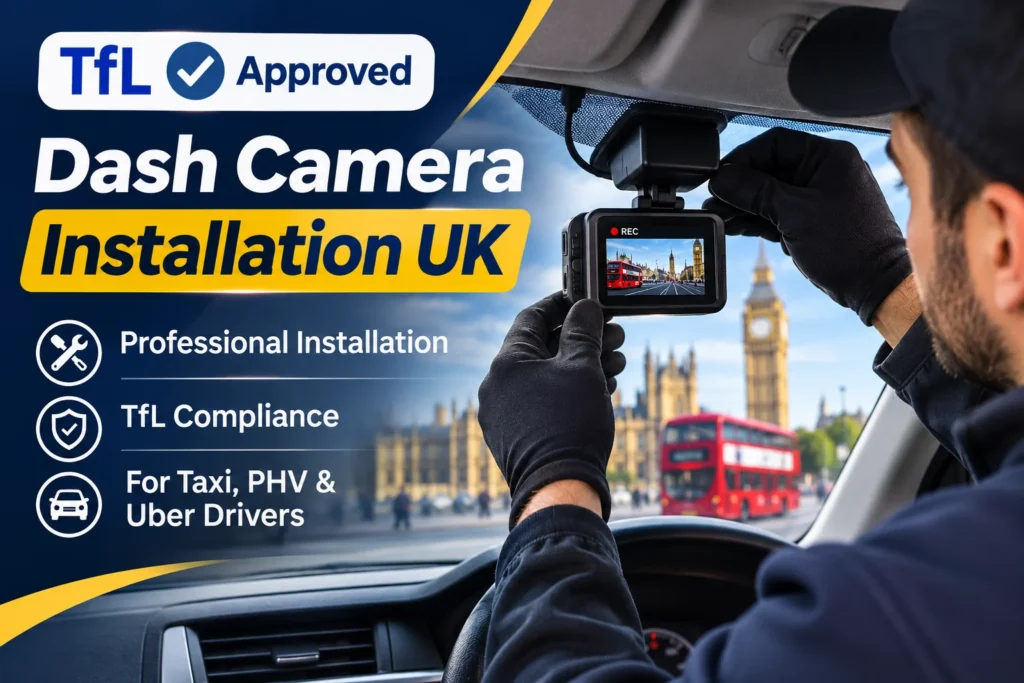
Choosing the right camera system is only the first step towards improving vehicle security. Correct installation is equally important, particularly for taxi and private hire vehicle drivers operating in London. TfL Dash Camera Installation UK involves selecting suitable equipment, positioning cameras correctly, securing wiring and ensuring the system works safely and reliably.
A professionally installed camera can help protect drivers and passengers, record important incidents and provide useful evidence following road accidents or disputes. However, drivers should understand that an ordinary retail dash camera is not automatically suitable for every TfL-licensed vehicle or approved CCTV application.
This guide explains TfL Dash Camera Installation UK, the professional fitting process, camera positioning, system compatibility and important privacy considerations.
1. What Is TfL Dash Camera Installation UK?
TfL Dash Camera Installation UK refers to fitting suitable camera equipment in vehicles operating under Transport for London licensing requirements. Depending on the vehicle and purpose, the system may include a forward-facing dash camera, an interior-facing camera or an approved multi-camera CCTV system.
These systems can help capture different types of incidents:
- Road traffic accidents and collisions
- Disputes involving passengers or drivers
- Incidents inside or around the vehicle
- Vehicle damage and security concerns
- Evidence that may assist an insurance investigation
For licensed London taxis and private hire vehicles, it is important to distinguish between an ordinary dashcam and a CCTV system intended to meet TfL requirements.
The equipment, camera positions and installation arrangements should be checked against the relevant TfL guidance before fitting.
2. Why Professional TfL Dash Camera Installation UK Matters
Professional fitting can make a significant difference to camera performance and vehicle safety. Incorrect installation may result in poor recording angles, loose cables, unreliable power connections or equipment that obstructs the driver’s view.
Here are some important benefits of professional installation.
Correct Camera Positioning
A professional installer can position cameras to capture the intended area without unnecessarily obstructing the windscreen or driver’s visibility.
Secure Wiring Connections
Proper wiring helps reduce the risk of loose connections, electrical faults and interruptions to recording.
Reliable Power Supply
A suitable power connection helps ensure that the camera starts and operates as intended. Installers should also check that the system does not place an unreasonable load on the vehicle battery.
Better Recording Quality
Correct positioning and configuration can improve the usefulness of recorded footage, including when recording in changing light conditions.
Improved Vehicle Safety
Securely mounted equipment and properly routed cables help reduce the risk of interference with driving controls, airbags and other vehicle safety features.
3. Understanding TfL Camera and CCTV Requirements
Before arranging TfL Dash Camera Installation UK, drivers should identify which type of camera system they actually need.
An ordinary forward-facing dashcam is designed mainly to record the road ahead. An in-vehicle CCTV system may include additional cameras to record the passenger compartment or other areas.
For London-licensed taxis and private hire vehicles, TfL has published guidance covering approved CCTV equipment and installation arrangements.
The position explained by TfL in its May 2024 response allows licensees to install CCTV voluntarily, provided suitable protections are in place for passenger safety and the handling of passenger information.
This means drivers should not assume that every taxi or private hire vehicle must have an interior CCTV system. They should also not assume that any commercially available camera automatically meets TfL requirements.
Before purchasing equipment, check:
- Whether the system is suitable for your vehicle category.
- Whether the exact camera model appears on the relevant approved list.
- Whether the proposed camera positions follow the applicable guidance.
- Whether the installer understands the requirements for licensed vehicles.
- Whether any separate vehicle modification approval is necessary.
4. The Professional TfL Dash Camera Installation UK Process
A professional installation usually involves several stages. The exact process depends on the camera model, vehicle type and number of cameras.
Step 1: Vehicle Inspection
The installer first checks the vehicle and identifies suitable mounting locations, power connections and cable routes.
This inspection helps determine whether the selected system is compatible with the vehicle.
Step 2: Camera System Selection
The correct camera system is selected according to the driver’s requirements and relevant licensing guidance.
Some drivers may need a forward-facing camera, while others may require an approved system with interior recording capabilities.
Step 3: Camera Positioning
The installer identifies suitable positions for each camera.
A forward-facing camera should capture the road clearly without obstructing the driver’s view. An interior camera, where required, should cover the intended area while following the approved positioning arrangements.
Step 4: Secure Camera Mounting
The cameras and recording equipment are mounted securely using suitable fittings.
A professional installer should avoid unsafe mounting positions, loose brackets and locations that could interfere with airbags or vehicle controls.
Step 5: Wiring and Power Connections
The installer routes cables carefully and connects the equipment to an appropriate power source.
Wiring should be secured and kept away from moving components, sharp edges and areas where it could interfere with vehicle operation.
Step 6: Recording Configuration
The camera system is configured according to its specifications and intended use.
Settings may include recording quality, date and time, storage capacity, recording modes and access permissions.
Step 7: Final Testing
The final stage involves checking that all cameras operate correctly.
The installer should confirm that footage is being recorded, the date and time are accurate, storage is working and the system starts as expected.
5. Important Features to Consider Before Installation
Selecting suitable equipment is an important part of TfL Dash Camera Installation UK.
Consider the following features before purchasing a system.
High-Quality Video Recording
Clear footage makes it easier to identify important details such as vehicles, road conditions and incidents.
Day and Night Recording
A camera should provide useful footage in different lighting conditions. Night recording performance is particularly important for drivers who work evening and overnight shifts.
Suitable Storage Capacity
Choose a recording system with sufficient storage for its intended recording requirements. Check how footage is stored, overwritten and retrieved.
Accurate Date and Time
Correct timestamps help identify when an incident occurred and make footage easier to review.
Secure Footage Access
The system should provide appropriate access controls so that recordings are not accessed or shared without permission.
Reliable Recording Performance
The camera should operate consistently during normal vehicle use and provide clear indications of faults or recording interruptions where supported.
6. Camera Positioning During TfL Dash Camera Installation UK
Camera positioning is one of the most important parts of the installation process.
Incorrect positioning can reduce recording quality or create safety problems.
Common camera arrangements include:
| Camera type | Main purpose |
|---|---|
| Forward-facing camera | Records the road ahead |
| Interior-facing camera | Records the vehicle’s passenger compartment |
| Rear-facing camera | Captures activity behind the vehicle where supported |
| Multi-camera CCTV system | Records multiple areas using a central recording unit |
The exact configuration should depend on the approved system and the vehicle’s requirements.
Installers should ensure that cameras do not obstruct the driver’s field of vision, interfere with airbags or create unnecessary hazards for passengers.
7. Passenger Privacy and Data Protection
Privacy is an essential consideration when arranging TfL Dash Camera Installation UK, especially when cameras record inside a passenger vehicle.
Drivers and operators should understand their responsibilities under applicable data protection legislation.
Important considerations include:
- Displaying suitable notices to inform passengers that CCTV is operating.
- Explaining why footage is being recorded.
- Limiting access to authorised individuals.
- Keeping recordings secure.
- Establishing appropriate retention and deletion arrangements.
- Providing information about how passengers can exercise their data protection rights.
Audio recording requires particular care because it can capture private conversations. It should not simply be left continuously active without considering whether it is necessary, proportionate and lawful.
Drivers and operators should review the relevant Information Commissioner’s Office guidance before using a recording system.
8. Professional Installation vs DIY Camera Fitting
Some basic dash cameras are designed for straightforward DIY installation. However, fitting a system to a licensed taxi or private hire vehicle can involve additional considerations.
| Professional installation | DIY installation |
|---|---|
| Installer assesses vehicle compatibility | Driver selects and fits the equipment |
| Professional mounting and wiring | Installation depends on the driver’s experience |
| System configuration and testing | Driver handles configuration and testing |
| Advice on relevant installation requirements | Driver must research applicable requirements |
| Suitable for more complex systems | May suit simple retail dashcams |
Professional installation is particularly useful when fitting multi-camera CCTV systems, connecting recording units or working with vehicle-specific electrical systems.
DIY installation does not automatically make a camera unsuitable, but the driver remains responsible for ensuring that the equipment and its use meet the relevant requirements.
9. Common TfL Dash Camera Installation UK Mistakes
Avoiding common mistakes can help prevent installation problems and unnecessary expenses.
Choosing an unapproved system: A camera being advertised for taxis does not automatically mean it is approved for every TfL-licensed vehicle.
Ignoring camera positioning: Poor positioning can produce unusable footage or obstruct the driver’s view.
Leaving loose wiring: Unsecured cables can interfere with vehicle controls and create safety risks.
Forgetting privacy notices: Passengers should be informed when CCTV is operating.
Ignoring audio settings: Audio recording can be particularly intrusive and requires careful consideration.
Skipping final testing: A camera that is incorrectly configured may fail to record when needed.
Failing to check compatibility: Not every camera system is suitable for every vehicle.
10. How to Choose a Professional TfL Dash Camera Installer
Selecting an experienced installer is an important decision.
Before booking TfL Dash Camera Installation UK, consider these points:
- Ask whether the installer has experience with taxis and private hire vehicles.
- Confirm the exact camera model and its suitability for your vehicle category.
- Check whether the installer understands the relevant TfL guidance.
- Ask how the equipment will be mounted and powered.
- Confirm whether installation and configuration are included.
- Ask whether the installer tests the complete recording system.
- Request information about warranty and after-installation support.
A reliable installer should explain the proposed system, fitting arrangements and any limitations before starting work.
11. Maintaining Your Camera System After Installation
Professional fitting is not the end of the process. Regular maintenance helps keep the camera system reliable.
Useful maintenance tasks include:
- Cleaning camera lenses carefully.
- Checking that cameras remain securely mounted.
- Inspecting visible cables and connections.
- Checking recording quality regularly.
- Confirming date and time settings.
- Reviewing available storage capacity.
- Testing footage playback.
- Updating firmware where recommended by the manufacturer.
Drivers should also review their footage retention and access procedures to ensure that recordings are handled appropriately.
Conclusion
TfL Dash Camera Installation UK is about more than attaching a camera to a windscreen. Choosing suitable equipment, using correct mounting positions, securing electrical connections and configuring reliable recording are all important parts of the process.
For taxi and private hire drivers, checking the relevant TfL-approved equipment and installation guidance is particularly important. Professional fitting can help reduce installation errors, improve recording reliability and support safer vehicle operation.
Whether you need a forward-facing dashcam or a more comprehensive CCTV system, choose equipment that suits your vehicle and intended use. Always consider passenger privacy, data protection and applicable licensing requirements before putting a recording system into operation.
Frequently Asked Questions (FAQs)
1. What is TfL Dash Camera Installation UK?
TfL Dash Camera Installation UK refers to fitting suitable camera or CCTV equipment in vehicles operating under Transport for London licensing arrangements. The appropriate equipment depends on the vehicle category and intended recording purpose.
2. Is a dash camera mandatory for every TfL-licensed vehicle?
No. TfL’s May 2024 published response stated that London taxi and private hire licensees could install CCTV voluntarily, subject to suitable passenger safety and information-handling protections. Drivers should check current licensing guidance for their vehicle.
3. Can I install my own dash camera in a TfL-licensed vehicle?
Basic retail dashcams may be suitable for DIY installation, but you must check whether the equipment and installation meet the requirements applicable to your vehicle and intended use. More complex CCTV systems may benefit from professional fitting.
4. Does every dash camera meet TfL requirements?
No. An ordinary retail dashcam is not automatically an approved CCTV system. Check the exact model and relevant TfL guidance before purchasing.
5. How long does professional dash camera installation take?
Installation time depends on the vehicle, camera model, wiring arrangements and number of cameras. A simple forward-facing camera may take less time than a multi-camera CCTV system.
6. Can a dash camera record inside a taxi?
Some systems include interior-facing cameras. However, drivers should check that the system is suitable for their vehicle and intended use and follow relevant privacy and data protection requirements.
7. Is audio recording allowed in taxis and private hire vehicles?
Audio recording requires particular care because it can capture private conversations. Drivers and operators should consider whether it is necessary and proportionate, provide appropriate information and follow applicable legal requirements.
8. Where should a dash camera be installed?
A forward-facing camera should be positioned to record the road without obstructing the driver’s view. Interior and other cameras should be positioned according to the system’s approved installation guidance.
9. Why should I choose professional TfL Dash Camera Installation UK?
Professional fitting can help ensure secure mounting, suitable wiring, correct configuration and proper testing. It is particularly useful for complex or multi-camera systems.
10. Does a professionally installed camera guarantee TfL approval?
No. Professional installation alone does not guarantee approval. The exact equipment, installation arrangement and vehicle requirements must be checked separately.
11. Do I need to display a CCTV notice to passengers?
Where CCTV is operating, passengers should receive clear information about the recording. Suitable signage and privacy information are important parts of responsible CCTV use.
12. How often should I check my installed dash camera?
Check the camera regularly to confirm that it is recording, the lens is clean, the date and time are correct and footage can be accessed when legitimately required.