
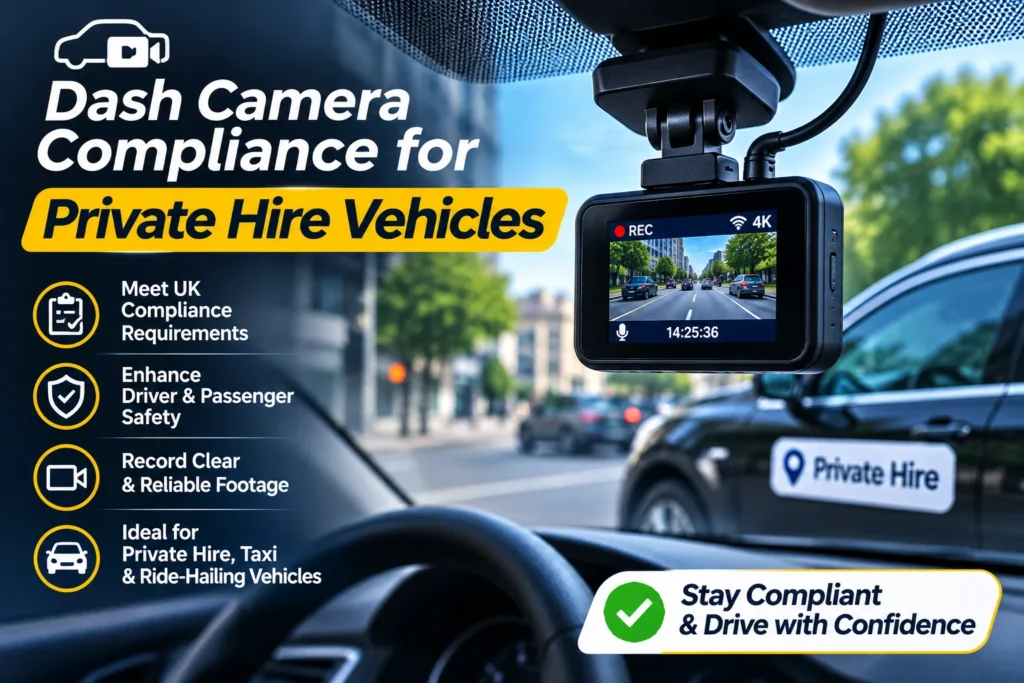
Dash cameras are increasingly useful for private hire drivers who want additional protection against road incidents, insurance disputes and unexpected situations. However, installing a camera in a licensed vehicle involves more than choosing a recording device. Drivers and operators must consider local licensing conditions, privacy responsibilities and how recorded footage is managed.
Understanding Dash Camera Compliance for Private Hire Vehicles UK is important before purchasing or installing recording equipment. Requirements can vary between licensing authorities, so a camera that is acceptable in one area may not automatically meet the conditions in another.
Why Is Dash Camera Compliance for Private Hire Vehicles Important?
Dash cameras can record useful evidence of road incidents, dangerous driving and collisions. However, cameras can also collect personal information about passengers, drivers, pedestrians and other road users. This makes Dash Camera Compliance for Private Hire Vehicles UK an important consideration for licensed operators.
1. Check Your Local Licensing Authority’s Rules
Check the policy of the council or licensing authority responsible for your private hire vehicle licence. There is no single camera specification that automatically applies to every private hire vehicle throughout the UK. Some authorities have detailed CCTV policies, while others distinguish between outward-facing dash cameras and systems that record inside the passenger compartment.
Ask whether outward-facing or inward-facing cameras are permitted, whether written approval is required, whether equipment standards apply, whether audio recording is restricted and whether the system must be inspected during a vehicle compliance test.
2. Understand Video and Audio Recording Rules
Video and audio recording should be considered separately. Recording conversations inside a vehicle can be significantly more intrusive than recording the road ahead. The Information Commissioner’s Office recommends switching off audio recording by default unless there is a specific and properly justified reason to use it.
For Dash Camera Compliance for Private Hire Vehicles UK, understand whether your chosen system records sound automatically. Check whether audio can be disabled independently and whether local licensing rules permit its use.
3. Provide Clear Passenger Notices
If your camera records passengers or other identifiable individuals, appropriate privacy information is important. A visible notice should explain that recording may take place and provide information about who is responsible for the footage and how people can make enquiries. Depending on the system and local requirements, notices may need to explain the purpose of recording and provide operator contact details for Dash Camera Compliance for Private Hire Vehicles.
4. Choose a Suitable Dash Camera
Look for clear daytime and low-light recording, a suitable viewing angle, reliable date and time settings, secure video storage, appropriate recording quality and stable mounting. For Dash Camera Compliance for Private Hire Vehicles UK, technical quality is only one part of the decision. The system must also suit the vehicle’s licensing conditions and intended recording purpose.
5. Install the Camera Safely
Camera installation should not obstruct the driver’s view, interfere with airbags or create loose wiring. The camera should be securely mounted, and power cables should be routed safely without interfering with vehicle controls or electrical systems. Use a competent vehicle electronics installer if you are unsure about wiring or mounting.
6. Manage and Protect Recorded Footage
Drivers and operators should establish clear procedures for storing, accessing, sharing and deleting recordings. Restrict access to authorised people, protect stored footage, keep recordings only for an appropriate period, securely delete footage when it is no longer needed and share recordings only when there is a proper reason. A clear retention policy is an important part of Dash Camera Compliance for Private Hire Vehicles UK.
7. Understand Your Data Protection Responsibilities
Footage showing identifiable people can be personal data. Depending on who operates the camera and why it is used, the driver, vehicle operator or another organisation may have responsibilities under UK data protection law. Identify the appropriate data controller, establish a lawful basis for processing and provide suitable privacy information. A Data Protection Impact Assessment may be necessary where surveillance is likely to create a high risk to individuals.
8. Check the System Regularly
Before starting work, check that the camera powers on, the lens is clean, the date and time are correct, the memory card has sufficient space, recording works, the mounting is secure and audio settings match your permitted configuration. Regular checks help maintain reliable evidence and support ongoing Dash Camera Compliance for Private Hire Vehicles UK.
9. Keep Your Licensing Requirements Under Review
Licensing policies can change, and requirements may differ when renewing or changing a vehicle licence. Keep copies of relevant approvals, installation information and equipment details. If you change your camera, add an interior camera or modify audio settings, check whether the change affects existing approval or privacy arrangements.
Getting Dash Camera Compliance Right
Dash Camera Compliance for Private Hire Vehicles UK should be considered before purchasing equipment. Drivers should compare their council’s licensing policy with the camera manufacturer’s specifications. Good Dash Camera Compliance for Private Hire Vehicles UK also involves appropriate signage, secure footage storage and responsible access to recordings. Operators should review Dash Camera Compliance for Private Hire Vehicles UK whenever they change their camera system or recording settings.
Conclusion
Dash Camera Compliance for Private Hire Vehicles UK involves more than installing a camera and recording journeys. Drivers and operators should check local licensing policies, understand privacy responsibilities, control audio recording, display suitable notices and protect stored footage. Always confirm the requirements of your own licensing authority before installation.
Frequently Asked Questions
1. Are dash cameras legal in UK private hire vehicles?
Dash cameras can be used, but their installation and operation must comply with applicable licensing conditions, road safety requirements and data protection law.
2. Do private hire drivers need permission to install a dash camera?
This depends on the licensing authority and the type of camera. Check local rules before installing outward-facing or inward-facing recording equipment.
3. Can a private hire dash camera record passengers?
Some systems can record inside the vehicle, but privacy and licensing requirements must be considered. Interior recording should have a clear and justified purpose.
4. Is audio recording allowed?
Audio recording is particularly intrusive. The ICO recommends disabling it by default unless there is a specific and properly justified reason to activate it.
5. Do I need a CCTV notice?
Where surveillance captures identifiable people, appropriate privacy information and signage may be required. Follow your local authority’s conditions and data protection responsibilities.
6. How long should footage be stored?
There is no single retention period for every system. Keep footage only for as long as necessary for the stated purpose and applicable requirements.
7. Can dash camera footage support insurance claims?
Relevant footage may help explain an incident and support an insurance investigation. Its usefulness depends on recording quality and circumstances.
8. Can I install a dash camera myself?
Some cameras are designed for straightforward installation. Professional installation can help ensure secure mounting, safe wiring and appropriate positioning.